Bestseller on Arrival
Until recently I had never given much thought to the Mamas and the Papas. After seeing the first Oprah interview with Mackenzie Phillips, I told a friend, “Yeah, I’ve heard of them. They sang Sunday, Sunday.”
“No,” he said. “Monday, Monday.”
“Oh,” I said. What I knew about the Mamas and the Papas was “Sunday, Sunday, da da da da da da” or “la la la la la la,” and with that failed bit of expertise exhausted, I had not much else to say.
Phillips, the daughter of lead singer John, has led a less harmonious life even than my personal rendition of their famous song. Her High on Arrival─an autobiography that details child sex abuse, consensual adult incest, and the shenanigans of people who took illicit drugs Sunday, Monday, every other day of the week, and would have invented an eighth day to take yet more drugs were that possible—is making the electronic tongue of the TV and Internet media wag quite a bit.
But I should state I have not read Phillips’ new book and do not plan to in any situation devoid of someone coaxing me to with an assault rifle. That means for all I know, it could be Shakespearian in quality and wisdom and an experience no human being interested in literature and living a better life would want to miss. For argument’s sake, I am going to assume it is not.
What I do know about works like Phillips’ is that their easy access to huge media promotion is the bane of better but less publicized works. And I have a direct interest because I (and three or four of my friends) write less publicized but presumably better works. Of course I understand that in a free market society people take their wares to the open mart and the most effective, not necessarily the best person, wins. If Phillips had declined to mainline the media, as she has done, from a capitalist perspective, it would have been silly, like leaving money on the table. But what are the rest of us to do? I, and many of my peers, routinely grapple with ideas about self-promotion. When my novel came out in 2002, one fellow I know suggested that to draw more attention to myself I should go and find Osama Bin Laden. Also, there are savvy agents, consultants, and how-to guides that can provide instruction about low-cost ways to promote one’s book that do not require a grisly death in a mountain cave in Pakistan.
I am not proposing that writers comprise an elite magical club, nor that anyone in this life gets to choose the competition. But I wonder if it would be OK to make a special pitch for ourselves, to say, hey, folks we are real writers, who have worked and struggled years to strengthen our grasp of the art. We apologize if you are disappointed that we are not the mistress of the serial killer, not the prostitute who slept with the famous politician, not the celeb who snorted an avalanche of cocaine. We may not have solid credentials in crime, scandal, and self-degradation, but we know how to do a damn good job of telling a story, fiction or nonfiction.
And the thing is . . . absolutely any subject treated in the scandal texts has been covered by real writers, even great ones. A high-nourishment-yet-fantastically-entertaining work that, like Phillips’ bio, takes a look at the 60s-spawned drug scene, is Joan Didion’s (a great American author whose company I would never consider myself in) Slouching Toward Bethlehem. Many actual writers have weighed in on the excesses of the counter-culture, from Didion to Tom Wolfe to Sara Davidson. Unless works by such people were lost in some nuclear mishap, I cannot imagine turning to an ex-sitcom star for insight and information about a weighty social problem.
Still, good arguments exist in favor of high-profile books: They bring people into book stores, and the avid reader may make more purchases than planned. Also, as my dear friend Carleen Brice reminded me, many non-writers employ professional writers as ghosts, throwing a bit more income at our lot.
In interviews Phillips’ says she has opened a dialogue on incest. It is a subject “not talked about,” she claims. Not talked about where? In Saudi Arabia? Maybe I am suffering from false memories, but I cannot recall a time in the last thirty years when the subject was not a media hit in America.
And I do not think books are the best answer to people who rape and/or drug children. The most intelligent response is simply—prison.
What public action speaks more eloquently to child sex abuse is the recent move toward extradition of globe-trotting felon Roman Polanski. After more than 30 years, the Los Angeles District Attorney’s Office decided it had tired of playing patty cake with rich Mr. Short Eyes, who pleaded guilty to having relations with a 13-year-old girl.
I wish Phillips well. But I do not wish to see her book fare better that its betters. No kid deserves to experience sexual assault or to have a psychopath for a dad. In a saner world she would not have been victimized, but also she would not have a book out.
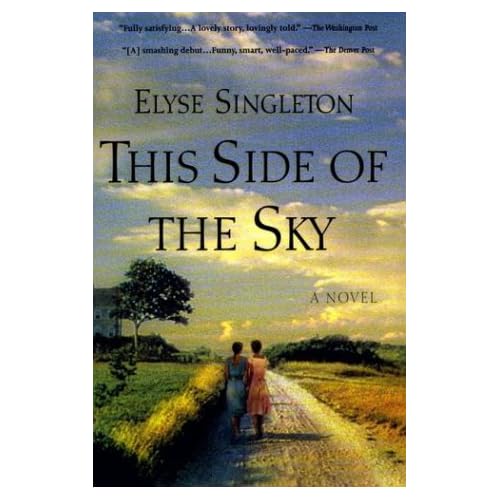
Elyse Singleton is author of This Side of the Sky and a winner of the Colorado Book Award for fiction.