Howdy folks. Checking in to let you know that I have two blog posts up on how writers cope with self-doubt, one on the Girlfriends Book Club and one on Writer Unboxed. Both posts offer great advice and inspiration for writers or anyone hoping to achieve a goal. As you may note, I quoted black authors extensively. It's part of my not-so-secret mission to make sure we get included when the topic is something other than race and diversity. I think you'll get a sense of the authors from their answers. If someone intrigues you, I hope you'll click the link to their site and check them out...even purchase one of their books.
In other news:
Jesymn Ward's Salvage the Bones was recently named a finalist for a National Book Award! Congratulations!
Last month Pym author Mat Johnson received the Dos Passos Prize, which "honors American authors whose mid-career works focus on American themes and the human experience, while embracing an experimental approach to literary form"!
On October 30th, #blacklitchat celebrates one year of talking with authors on Twitter! The anniversary celebration will be hosted by Tayari Jones. Congratulations Bernadette and Dee!
Jacqueline Luckett's forthcoming Passing Love got a rave review in Publishers Weekly!
Bernice McFadden has a couple of new releases coming in January. Dennis Lehane, author of Mystic River, says about Gathering of the Waters: "As strange as this may sound, Bernice L. McFadden has created a magical, fantastic novel centered around the notorious tragedy of Emmett Till's murder. This is a startling, beautifully written piece of work."
Martha Southgate, author of The Taste of Salt, recommended three books for finicky folks on NPR.
Tina McElroy Ansa is one of the storytellers for The Moth's 5th radio season. Go here to stream or to check to see if one of your local radio stations is broadcasting stories from The Moth. Or, if you've got a story to tell, hit 'em up!
Showing posts with label guest bloggers. Show all posts
Showing posts with label guest bloggers. Show all posts
Friday, October 14, 2011


Tuesday, June 28, 2011
Summer books! Suggestions from Ernessa T. Carter
Black is Beautiful -- Especially on Vacation
 So before I get into my summer reading list, let's get this out of the way: My own novel, 32 CANDLES, is now out in paperback. If you haven't read it yet, please pick up a copy from Amazon, Target, or your local bookstore. If you've already read it in hardcover, pick up the paperback for a friend. And fellow library lovers, if you checked it out, do consider picking up a copy for your bookshelf. After all, it has a yellow cover and it's a known fact that yellow looks fantastic on any kind of bookshelf. Just click on the book cover to buy the book at Amazon.
And one more plug, I'm running all sorts of neat contests over at 32CANDLES.com, so definitely pay me a visit -- but not until after you read this my list of books I want to read on my summer vacay. Because let's face it, books are best enjoyed on vacation.
 IF SONS, THEN HEIRS by Lorene Carey. Maybe I'm in the minority here, but there's just something about reading a really deep book by the pool or ocean. I just adore it. The last time I went to Hawaii, I read FREEDOM by Jonathan Franzen, and for my upcoming Hawaii jaunt, I'm getting a copy of IF SONS, THEN HEIRS. I don't know much about this book, because I'm a terrible avoider of spoilers (read: ridiculous nerd), but a lot of intelligent people whose opinions I respect have recommended it highly, so it's coming along to the beach with me.
2. KINKY GAZPACHO by Lori Tharps. Now being in an IR myself, I'm a big fan of hearing about other people's IR relationships -- especially my fellow black women's. So this memoir of Lori Tharps's travels in Spain, which include falling in love with her Spanish husband and, I'm sure, many lessons learned, is right up my alley. Weirdly enough, GAZPACHO has been on my TBR list for three or four years now. But having read (and loved) SUBSTITUTE ME last year, I'm determined that Tharps's memoir will come off my TBR list this summer.
 3. SILVER SPARROW by Tayari Jones. This is another deep read, but I do know what it's about -- a man with two families and two daughters, one of which knows about the other, but not vice versa. I've been following this book's progress on Tayari's blog, and I'm seriously foaming at the mouth to read it. I'm pretty shocked that I was able to hold out until my vacation to read it.
4. JUST WANNA TESTIFY by Pearl Cleage. You know what I just really love? When authors continue to step up their game and keep it fresh and creative. From what I can tell, Cleage's latest novel involves our old friend Blue Hamilton from previous novels and .... wait for it ... sexy black female vampires. Yes, vampires! I always enjoy a Pearl Cleage book and I really can't wait to read this one. Way to mix it up!
 5. THE BROKEN KINGDOMS by N.K. Jemison. There is so little black sci-fi or fantasy out these days. It seriously makes this sci-fi nerd so sad. Luckily, we have Jemison to keep the fantasy flame alive. THE HUNDRED THOUSAND KINGDOMS, The first installment of this trilogy, was wildly sexy and inventive. I'm looking forward to diving even further into the enthralling world Jemison has set up in the second installment.
So that's what I plan to read on my upcoming summer vacation. How about you? Living in California as I do, I'm always looking for a good beach read, so do sound off in the comments.
Ernessa T. Carter
Author, Blogger, Totally Fierce Nerd
-------
http://32candles.com/
http://fierceandnerdy.com/
http://twitter.com/#!/ErnessaTCarter
http://www.facebook.com/ernessa
So before I get into my summer reading list, let's get this out of the way: My own novel, 32 CANDLES, is now out in paperback. If you haven't read it yet, please pick up a copy from Amazon, Target, or your local bookstore. If you've already read it in hardcover, pick up the paperback for a friend. And fellow library lovers, if you checked it out, do consider picking up a copy for your bookshelf. After all, it has a yellow cover and it's a known fact that yellow looks fantastic on any kind of bookshelf. Just click on the book cover to buy the book at Amazon.And one more plug, I'm running all sorts of neat contests over at 32CANDLES.com, so definitely pay me a visit -- but not until after you read this my list of books I want to read on my summer vacay. Because let's face it, books are best enjoyed on vacation.

2. KINKY GAZPACHO by Lori Tharps. Now being in an IR myself, I'm a big fan of hearing about other people's IR relationships -- especially my fellow black women's. So this memoir of Lori Tharps's travels in Spain, which include falling in love with her Spanish husband and, I'm sure, many lessons learned, is right up my alley. Weirdly enough, GAZPACHO has been on my TBR list for three or four years now. But having read (and loved) SUBSTITUTE ME last year, I'm determined that Tharps's memoir will come off my TBR list this summer.
3. SILVER SPARROW by Tayari Jones. This is another deep read, but I do know what it's about -- a man with two families and two daughters, one of which knows about the other, but not vice versa. I've been following this book's progress on Tayari's blog, and I'm seriously foaming at the mouth to read it. I'm pretty shocked that I was able to hold out until my vacation to read it.4. JUST WANNA TESTIFY by Pearl Cleage. You know what I just really love? When authors continue to step up their game and keep it fresh and creative. From what I can tell, Cleage's latest novel involves our old friend Blue Hamilton from previous novels and .... wait for it ... sexy black female vampires. Yes, vampires! I always enjoy a Pearl Cleage book and I really can't wait to read this one. Way to mix it up!
5. THE BROKEN KINGDOMS by N.K. Jemison. There is so little black sci-fi or fantasy out these days. It seriously makes this sci-fi nerd so sad. Luckily, we have Jemison to keep the fantasy flame alive. THE HUNDRED THOUSAND KINGDOMS, The first installment of this trilogy, was wildly sexy and inventive. I'm looking forward to diving even further into the enthralling world Jemison has set up in the second installment.So that's what I plan to read on my upcoming summer vacation. How about you? Living in California as I do, I'm always looking for a good beach read, so do sound off in the comments.
Ernessa T. Carter
Author, Blogger, Totally Fierce Nerd
-------
http://32candles.com/
http://fierceandnerdy.com/
http://twitter.com/#!/ErnessaTCarter
http://www.facebook.com/ernessa
Friday, May 6, 2011
Guest blog post by Lorene Cary

At the end of my first book, Black Ice, a memoir, I wrote that I’d “been given my stories…” Since then, I’ve felt as if I were driven internally to grow into them, from the Underground Railroad stories that I understood better once I myself had children, and now the lynching stories that sound rumbling depth charges underneath the present action of my new novel, If Sons, Then Heirs. Understand, actually, is the wrong word. Rather, it feels as if the stories force their way into books. They wait, like tiny shelled creatures, until marriage and children, business, grief, failure, and love soften me into a suitable environment for their expression. Then it’s time to write.
I remember hearing about lynching first when I was a very little girl. It had no name, and no certainty, so that for years, I doubted that I’d heard it at all, or that I’d heard correctly, or that what I’d heard was true. My grandmother and mother and aunts were talking about my great-grandmother’s first husband. His family lived near Chadds Ford, PA; Grandmom, who was from Buffalo, married him at 16. Three years later he went to a state or county fair, ran into “some trouble” with young white men, and never came home. Grandmom was left a 19-year-old pregnant widow.
In high school and again in college I read Southern Horrors: Lynch Law in All Its Phases, and A Red Record. I was conscious of using the anti-lynching activist, journalist, and newspaper owner Ida B. Wells-Barnett as a model and adopted ancestor. I thought it brilliant of her to use only those cases that were already documented in the mainstream press, so that no one in power could deny or refute the God-awful facts and narratives she presented.
 |
| Would make a great Mother's Day gift! |
I saw it in a terrible loop video that demanded expression. Finally, now that my stepson’s children are their own wonderful young characters, our older daughter has grown up and moved out, now that I’ve run a business for twelve years, cared for elderly relatives, watched dear young men go to jail and die, inherited property, as well as emotional debt, and written my own will, I can finally write a fictional version of this story that wouldn’t leave me. My characters hear it, tell it, and argue about telling it to their grandchildren:
Over the years the story had cooked inside Rayne’s head, helped by the comments of the few people he’d ever told. You don’t bring it out too often.
But, wait. Here come the miracle. My Lord!
Jones held in his voice the exact hopeful reverence of sharecroppers who’d shared the news with him. They’d get to this part of the story and shake their heads—and this is what I want you to know, too, Jones says, referring to Selma’s silence, because if Rayne didn’t know the first part, then he couldn’t know the miracle: that when the mob had done as much as you can do to a human being and him still be alive, a man pushed his way through the crowd, crazy as they were by now, crazy-mad with liquor and the terrible intoxication of blood—a colored man elbowed his way to the front and begged for the boy’s life.
That was the part everyone repeated: And then, do Jesus, a black man come up in front of them.
And it didn’t matter whether the listeners had heard the story before. They told it again, just as Jones told Rayne, and Rayne told his construction partner and later Lillie, because it remained a mystery. And because everyone wanted to know this and to learn, as Jones learned, what was possible.
Jones’s words, present tense, because heroism exists outside of time: “He stands beside the boy’s body, tied by now so that it won’t fall flat. This black man says—listen what he say standing in front of all these crazy, drunk-up white people—he says: ‘For God’s sake, don’t finish this, please. Whatever you meant to teach him this boy has surely learnt. And he’ll never be good for nothin now anyway. Please, for pity’s sake, just lemme take’im down. Lemme take’im home.’”
Where had he come from, this man who appeared like the black face of God speaking mercy?
The outrageousness of it would not be suppressed. It leached from between the rocks, seeped into the streams, soaked into the swamps. Finally, it ran in the papers, so they couldn’t say it didn’t happen. Jones was sure that Rayne could find it in the records, and one day, sure enough, he looked it up on the Internet.
From Ida B. Wells’s turn-of-the last century writings to the mind of a 21st century fictional character: these stories are as tough as those fairy shrimp whose eggs wait until heavy rains flood their pond. Then they come out, reproduce—and lay new eggs for the next generation.
Learn more on Lorene Cary's website. Follow her on Twitter.
Sunday, December 19, 2010
Holiday musings from Andrea King Collier

Below are her tips for readers on what books to buy and where to buy them and for authors on how to get more readers:
When I think of the holidays I think of joy. (Really, I think about being overwhelmed with the trappings of joy-shopping, parties, getting the Christmas cards out the door.) I also get joyful thinking about how many Black writers are doing their thing, and the hopes that we will all find new readers.


Black authors, expand your lane. We complain a lot about where our books are placed, and who does and doesn’t review our books. This wild, wild West of publishing means that a lot of the gatekeepers are gone. Between Facebook, Twitter, the ability to set up your own interviews and reach out to new audiences with your blogs, you get to create a groundswell of people coming into stores and going on line to buy your book. The “If you build it, they will come” mentality is gone baby gone. Do the hustle.
All readers, as you shop for books for yourself and for others, honor the independents, including Black bookstores with your business. This is not only a critical time for writers, it is a make or break time for independents. If we don’t support them now, we will bemoan their closing and what they did for us in the future. This holiday buy a few books, or all your books from an indie. The big box stores are convenient. Every dollar you spend via a visit to, or an online order to stores like Hue-Man in Harlem, or the Shrine of the Black Madonna helps authors who often get few venues to read and sell. It means that you support community hubs where people come together to talk about health, spirituality, love, economic power and hope. It means that you are investing in the future of books.
Most of all readers, please keep reading. Writers keep working on craft. Make it as good as it can be, then take a good deep breath and go back in and make it better. Here’s wishing you a bright shiny reading/writing holiday and a delicious New Year.
Friday, December 17, 2010
Martha Southgate's advice for writers & recommendations for readers
 Martha Southgate is the author of four novels, most recently Third Girl From the Left (one of my all-time favorites, a love letter to the movies, and these glowing reviews tell why). Her new novel will be published by Algonquin Books in 2011.
If you haven't read Third Girl From the Left I envy you because you are in for a treat! Leave Martha a comment below and maybe you'll win a signed copy. If you don't, run, don't walk, to your nearest book store or device and buy it. Actually, go get it now anyway. If you end up winning another copy, you can give away the one you bought. Martha is also one of the co-founders of ringShout, a place for black literature. Check out that blog and also her guest post below on writing and reading:

The past year, I’ve been working the first full-time day job that I’ve had in many years (I know, I know, I’ve been lucky that I haven’t had to do that sooner). The hours are not oppressive and there is no Blackberry involved but still, I’ve had trouble getting my new novel started. My wish for the new year for myself--and for any writers out there who are facing the same dilemma—is time, discipline and kindness to ourselves. Do what you can and do make a schedule for writing that you stick to as much as possible (I gotta get on that myself). But don’t hate yourself when you fall off course. Just get going again.
On a related note, I believe it’s as important to keep reading as it is to write. Whenever I meet a “writer” who says they don’t have time to read, frankly, I dismiss them out of hand. If you don’t read, you can’t write. Period. And for those of you who are readers alone: thank you. We couldn’t make it without you. So for all the readers and writers out there, here are three of my favorite books by black authors that were published this year:
God Says No by James Hannaham. This first novel is the story, both touching and hilarious, of Gary Gray, a staunch fundamentalist Christian with one big problem. He's gay. The story of how he fights it (unsuccessfully) is one of the most original of the year.
Before You Suffocate Your Own Fool Self by Danielle Evans This young writer has received plenty of attention for this first collection of stories--and she deserves it. These stories rock! Read 'em yourself and see.
[Carleen here: Ron Charles, the Washington Post books editor, reviews Evans' collection and has an interesting discussion (with himself) about who should review black authors.]
Substitute Me by Lori Tharps. Read this one with your book club and watch the sparks fly. This is pop fiction with some heavy themes about race, class, and what happens when rearing your own child becomes something you outsource.
Whatever holiday(s) you celebrate--celebrate them with a book! And, as Tiny Tim once said," God bless us, every one."
Monday, December 13, 2010
Ernessa T. Carter recommends books for everybody on your list
Or at least a good chuck of the people on your list. Ernessa is the author of the novel 32 CANDLES, which I would recommend for sisters, bffs, and anyone who hearts funny romantic reads. Read below and leave Ernessa a note and maybe you'll win a signed copy of one of my favorite books of 2010!

Here are her suggestions:
Oh, I just heart books to death, and I’ve felt especially lucky this year, because so many awesome books have come out. Here’s my gift suggestion list -- and make sure to click on the links to read my book reviews for all but one of these suggestions from earlier in the year:
For the young woman, feminist or literate sci-fi nerd on your list: WHO FEARS DEATH by Nnedi Okorafor was not only my favorite book of the year, but also my favorite main character of the year. This book has it all: an intriguing future landscape, a powerful and fierce lead, and an epic love story. If it were up to me, this book would be added to the high school canon. But sadly, more girls will be encouraged to read LORD OF THE FLIES than this book which actually portrays young black women in a complex and powerful way. So if you know any teenagers whose parents won’t freak out about them reading a book with sex in it, please do them the favor of gifting them with this stunning novel.


For the mom or dad on your list: I found that the non-fiction COME TO WIN by Venus Williams and Kelly E. Carter, inspired me to be both a better person and a better parent. This book is basically a collection of essays in which successful people (Jack Welch, Bill Clinton, Condoleeza Rice, Vera Wang, Phil Knight, and Denzel Washington are just a few of the “names” in this book) talk about how playing sports shaped their future career wins. It’s a fascinating collection and best read slowly in my opinion.

For your BFF mom friend: I’ve been suggesting that no working mom read SUBSTITUTE ME by Lori Tharps alone as it will only frustrate you if you don't have someone to talk with about it immediately after finish it. This is a compelling read for working moms and a real conversation-starter. So do yourself a favor. Get a copy for you and your BFF mom friend, read it at the same time, then book a lunch date to discuss it.

So those are my book recs for the holiday season. Let me know which books you’re giving away as gifts this year
Happy Holidays and Happy Reading!
etc

Here are her suggestions:
Oh, I just heart books to death, and I’ve felt especially lucky this year, because so many awesome books have come out. Here’s my gift suggestion list -- and make sure to click on the links to read my book reviews for all but one of these suggestions from earlier in the year:
For the young woman, feminist or literate sci-fi nerd on your list: WHO FEARS DEATH by Nnedi Okorafor was not only my favorite book of the year, but also my favorite main character of the year. This book has it all: an intriguing future landscape, a powerful and fierce lead, and an epic love story. If it were up to me, this book would be added to the high school canon. But sadly, more girls will be encouraged to read LORD OF THE FLIES than this book which actually portrays young black women in a complex and powerful way. So if you know any teenagers whose parents won’t freak out about them reading a book with sex in it, please do them the favor of gifting them with this stunning novel.

For the academic on your list: I’ve been telling everybody that WENCH by Dolen Perkins-Valdez needs to be on college syllabi across the nation. It’s a amazing feat of historical fiction: well-written, suspenseful, and a page-turner. Seriously, when was the last time you just couldn’t put down a piece of historical fiction?

For the person who’s always complaining that books about Africa are too heavy:Actually that person would be me, so how pleased was I to find AYA by Marguerite Abouet and Clement Oubrerie, a graphic novel, about three young girls living, learning, and loving in a 1970s-era Ivory Coast town? Along with BAYOU by Jeremy Love and INCONEGRO by Mat Johnson, I think this forms a triumvirate of black graphic novel must-haves.

For the mom or dad on your list: I found that the non-fiction COME TO WIN by Venus Williams and Kelly E. Carter, inspired me to be both a better person and a better parent. This book is basically a collection of essays in which successful people (Jack Welch, Bill Clinton, Condoleeza Rice, Vera Wang, Phil Knight, and Denzel Washington are just a few of the “names” in this book) talk about how playing sports shaped their future career wins. It’s a fascinating collection and best read slowly in my opinion.

For your BFF mom friend: I’ve been suggesting that no working mom read SUBSTITUTE ME by Lori Tharps alone as it will only frustrate you if you don't have someone to talk with about it immediately after finish it. This is a compelling read for working moms and a real conversation-starter. So do yourself a favor. Get a copy for you and your BFF mom friend, read it at the same time, then book a lunch date to discuss it.

So those are my book recs for the holiday season. Let me know which books you’re giving away as gifts this year
Happy Holidays and Happy Reading!
etc
Thursday, December 9, 2010
Donna Hill reflects on the blessings of 2010
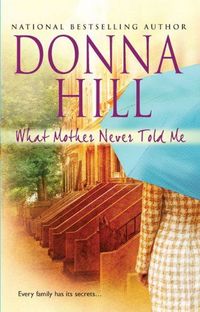
Below is from Donna:
As the year draws to a close, it is certainly a time for reflection. So much has transpired this year. My son went off to college and he will never know how truly proud of him I am. I embarked upon a new educational journey (very late in life) and the rewards are “priceless.” Being among so many creative minds is no less than awesome and it infused me with purpose. It reinforced the blessing that was bestowed on me—the ability to write and to transport not only myself but others into a world that I created. But it also reminded me of my responsibility as a griot—the teller of tales—to not only entertain but to inform. So even as I write my romances my goal is not always to titillate but to remind us about the power of love no matter what color it is. When I write my more serious novels, I want to bring to the forefront the issues that are of importance and that will leave the reader thinking and evaluating and perhaps looking at life differently.
There is power in the written word and as writers we must be mindful of that power. We have a responsibility to give our best, not for the money but for the art—as our work will stand as a testament long after we are gone.
I am grateful for the two decades that I have been allowed to do what I love. And in this season of giving, I give thanks to all of the readers who have been there and supported this girl from Brooklyn!
I am also grateful for the wonderful books I have read this year and thank the authors who shared their gift with me and the world. If I start naming folks I know I will leave someone out!
I am also grateful for the friendship and support from my sister and brother writers who share their trials and triumphs and remind me why we do what we do when it gets really hard.
I am thankful for my family that keeps me grounded, and remain my biggest cheering squad. And most of all I am thankful to God for giving me this wonderful gift of words!
Monday, December 6, 2010
Tina McElroy Ansa expresses gratitude & shares a little about her writing process

What book-related/writing-related things I'm grateful for
Thanksgiving has come and gone. However, I try to remember to be thankful every day the Good Lord gives me.
In my writing life, I have one big thank you. And in my publishing life, I have another..
So, I am thankful this year that I discovered how easy it was to install the Voice Recognition program on my computer.
I followed the instructions, I had a mic and I had a story, so I was ready to go.
I not only am able to get ideas -- that come in the middle of whatever -- down on the computer for use later. I’m also able to dictate the notes, quotes, descriptions, conversations, edits, etc. that are so easily lost to us writers because we say, “Oh, that’s so wonderful, I’ll surely remember that!”…Never happens.
I also find that if I dictate first drafts, I can:
1. Hear how the prose and dialogue sound in the air as well as on the page. Writing, especially dialogue, that is not just right lands like a horse shoe in the middle of a funeral when spoken. The same is true for descriptions, even beautifully written descriptions that go on too long for the context. (I know that’s one of my challenges.)
2. When reading it on the screen again for typos and such, I have another chance to edit each word and the work as a whole. A real opportunity I gratefully take.
In my role as publisher at DownSouth Press, I am thankful for Carolina Knight, who has entrusted me with her first novel THE BOOK OF EPHESUS, which we will publish in 2011.
Thursday, December 2, 2010
Heidi Durrow recommends books about mixed-race and black children

Heidi says:
I'm always on the lookout for diverse books for kids. This year I have some must-buy titles for the young folks I know:
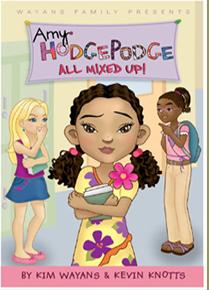
1. Amy Hodgepodge (series) by Kim Wayans & Kevin Knotts. This wonderful series about a young girl who is African-American, Japanese, Korean and white will delight young readers with the lively stories and fun illustrations by Soo Jeong.
2. Mixed: Portraits of Multiracial Kids by Kip Fulbeck. This wonderful photo book tells a tale in pictures that is worth a thousand words. Kip Fulbeck's vibrant portraits of mixed kids of every stripe and polka dot are an affirmation to kids who may not see themselves reflected anywhere but their own mirror. Best of all are the responses the kids give to describe who they are. One writes: "I like being a kid because you have a bigger mind to be different things. I don't want to be anyone else but me." The book is also an exhibit touring the country. Don't miss it if it's in a town near you!

3. Good Fortune by Noni Carter. Penned by the precocious and dynamic Noni Carter who published the book as a freshman at Harvard, Good Fortune is a great read for high schoolers. The story of a slave who yearns for and then enjoys freedom, Good Fortune is an enchanting tale. All the more so because it was written by such a talented young woman! Can't wait for more from her!
Check out a video with Ms. Carter in which she explains the inspiration for her novel.
Monday, November 29, 2010
Poet Tara Betts recommends books for the holidays

Everything below is from Tara:
The holidays always mark a lull for me that lets me read uninterrupted. Here are a few of the titles on my shelf that I thought might be good holiday gifts in fiction, poetry and books for kids. I’ll be curling up with them to avoid the cold this season.
The Fiction Section
Some Sing, Some Cry by ntozake shange & Ifa Bayeza is the first collaborative novel between these sisters. Bayeza is an accomplished playwright, and shange is the author of for colored girls who have considered suicide when the rainbow is enuf.

How to Escape from a Leper Colony by Tiphanie Yanique is a debut collection of short stories. This is on my winter reading list, but if her prize-winning chapbook “The Saving Work” is any indication of how amazing this collection is, then it’s worth reading!
The Poetry Section
I devour poetry, so, here are some collections I’d like to share.
Kaffir Lily by Bianca Spriggs is a debut collection filled with visceral lines and rich images.
Running the Dusk by Christian Campbell is another first poetry collection that recently won the U.K.’s coveted Aldeburgh Prize.
Ruth Forman’s Prayers Like Shoes is her third collection. Prayers Like Shoes is published by Whit Press, a small press for work by women involved with the Hedgebrook writers retreat.

Conversion by Remica Bingham won the Naomi Long Madgett Prize a couple of years ago, but I think this is a book that speaks as a close observer of the world who notices family, history, land and the literature that shaped her.
Books for Young Readers
 I recommend Virginia Hamilton’s The People Who Could Fly, She Stories, and Sweet Whispers, Brother Rush since Christmas is for the kids! Keep Climbing, Girls by the late Beah Richards is a book that I’ve given to little girls that I know. It may be good for the women and girls in your life too. If you don’t know Beah Richards, she gave the moving monologue in movie “Beloved” about loving and kissing your own hands.
 I’m looking forward to checking out Zora and Me by Victoria Bond and T.R. Simon. This fictional account of young Zora Neale Hurston as a detective has me excited about her adventures. I haven’t seen a young black detective since Billy Jo Jive and Suzy Sunset were on “Sesame Street.”
Friday, November 26, 2010
A Christmas memory from Cheri Paris Edwards
Happy Black Friday, y'all! Hope you had a wonderful Thanksgiving! If you're shopping till you're dropping today, make sure to pick up a few books to celebrate NBABBABAAGITSNBM.
 Following is a guest post from Cheri Paris Edwards, who will be giving away a copy of her brand new novel THE OTHER SISTER. (You can read an excerpt here.) Leave her a comment and share a holiday memory of your own or suggest a book we should all read. A winner will be chosen at random and announced on December 20th.
It was clear Christmas was Mama’s favorite time of the year as soon as you stepped inside her home. Sparkling white lights draped over fragrant sprigs of eucalyptus and glowing candlelight brightened the rooms. Fat gold ribbon curled in oversized champagne glasses sitting on tabletops and Mama perched on her white couch like the queen of her own kingdom, instructing us kids to do whatever was needed. Mama didn’t fool us though. We sibs knew that she was really a princess—a girl of a woman, who believed in fairy tales AND the Lord.
When Mama became ill two years ago, we all took turns helping her. In the hospital, she refused to let nurses bathe her, telling them, “My daughters will do it.” And, we did. Once she was home, we stayed with her in shifts. We never could figure out if she couldn’t do things for herself or wouldn’t. To some extent we had waited on Mama a long time and we wondered if maybe she just got used to depending on others, but we cared for her anyway. Mama lived a year and 6 months past the Mother’s Day Sunday when she lost consciousness in my sister’s garage. My sister told me as we prepared for her funeral that Mama said Jesus sent her back that day, that’s when she heard the two of us praying, and we saw her body snap back to life.
Today as I drove passed my mailbox I wished it held one of Mama’s handwritten cards—the ones I didn’t even open sometimes. I miss you, Mama.
My newest book, “The Other Sister” is dedicated to my Mother.

It was clear Christmas was Mama’s favorite time of the year as soon as you stepped inside her home. Sparkling white lights draped over fragrant sprigs of eucalyptus and glowing candlelight brightened the rooms. Fat gold ribbon curled in oversized champagne glasses sitting on tabletops and Mama perched on her white couch like the queen of her own kingdom, instructing us kids to do whatever was needed. Mama didn’t fool us though. We sibs knew that she was really a princess—a girl of a woman, who believed in fairy tales AND the Lord.
When Mama became ill two years ago, we all took turns helping her. In the hospital, she refused to let nurses bathe her, telling them, “My daughters will do it.” And, we did. Once she was home, we stayed with her in shifts. We never could figure out if she couldn’t do things for herself or wouldn’t. To some extent we had waited on Mama a long time and we wondered if maybe she just got used to depending on others, but we cared for her anyway. Mama lived a year and 6 months past the Mother’s Day Sunday when she lost consciousness in my sister’s garage. My sister told me as we prepared for her funeral that Mama said Jesus sent her back that day, that’s when she heard the two of us praying, and we saw her body snap back to life.
Today as I drove passed my mailbox I wished it held one of Mama’s handwritten cards—the ones I didn’t even open sometimes. I miss you, Mama.
My newest book, “The Other Sister” is dedicated to my Mother.
Wednesday, November 24, 2010
Denene Millner recommends books for kids
The following is from Denene, who will give away signed copies of three children's books she's authored or served as editorial consultant on:
Read below and leave Denene a comment for a chance to win! Feel free to chime in and tell us what children's books you are giving this year. You have until December 20th to leave your comment. Denene will send the books in January. Thanks much Denene!
Why I Buy Children's Books by Black Authors and Why You Should Too
 I hated bugs, so playing in the backyard wasn’t an option. And my parents, who worked and slept and worked around the clock, didn’t have time to entertain me, so being taken to the park or bowling or the museum hardly ever happened—if at all. And I didn’t have many friends, so there was that. Books were my refuge. My babysitters. My BFFs. Judy Blume. Beverly Cleary. Frances Hodges Burnett. Their worlds, their spirits, their thoughts, their shenanigans—all of it made me… happy.
 So long ago, it was what it was.
 And really, it is that uncomplicated. Debbie Allen’s “Dancing in the Wings” is every bit as poignant a tale about self-esteem as, say, Jamie Lee Curtis’s “I’m Gonna Like Me,” just as Derrick Barnes’ “Ruby and the Booker Boys” series is as sassy and humorous and identifiable as Beverly Cleary’s “Ramona” books. But black children hardly know this because the black stories are hardly ever made available to them and white children are clueless about it because no one ever fixes their mouths to suggest them as good books they might enjoy.

Read below and leave Denene a comment for a chance to win! Feel free to chime in and tell us what children's books you are giving this year. You have until December 20th to leave your comment. Denene will send the books in January. Thanks much Denene!
Why I Buy Children's Books by Black Authors and Why You Should Too
I never really noticed that none of the characters looked like me. There were no black girls, no cornrows, no thick lips and chocolate kisses and double-dutch rhymes on the library shelves or at the bookstore at the mall or in the cleverly-wrapped boxes under our Christmas tree. It just was what it was.
But when I got pregnant with my first baby, I promised that this didn’t have to be her reality—that my child didn’t have to spend the most impressionable part of her life missing and longing for herself in the pages of the best gifts I could ever give her: literature. And before she made her big debut on this sweet Earth, she had a shelf full of books, many of them books that featured characters that looked like her: Ezra Jack Keats’ “The Snowy Day,” “Goggles,” “and Whistle For Willie”; Vera B. Williams’ “More, More, More Said the Baby”; Faith Ringold’s “Tar Beach,” Nikki Giovanni’s “The Sun Is So Quiet,” Donald Crews’ “Big Mama,” Andrea Davis Pinkney’s “Duke Ellington: The Piano Prince and His Orchestra.” Admittedly, the pickings were slim. But I found them.
Some eleven years later, the pickings are still slim. I mean, presumably there are more books for, about and by children of color being published today than there were back in 1999, for sure. But finding them is about as elusive as a towheaded elf beneath a four-leaf clover. I swear, at least once a week I find myself standing in Borders or Barnes & Noble, watching some unsuspecting clerk search in vain for children’s books featuring black characters, knowing full well they’re not there. Their exasperation with the search always leads to a heart-felt discussion about why the store doesn’t bother to carry black children’s books (they insist no one buys them; I suggest that it’s impossible to buy something that isn’t available for purchase), which inevitably leads to me lecturing about how important it is for stores, librarians, teachers and parents to recognize that books featuring children of color not only can help make black kids fall in love with the written word, but, in the most basic of ways, give white children an up close and personal view into the worlds of little people who don’t look like them, but, in many ways, are just like them. I wrote about that last point in a piece for the MyBrownBaby page on Parenting.com, in which I fessed up to integrating the bookshelves of my children’s white friends by giving them black books for birthdays, Christmas and, well, just because:
My hope is when I pass along a black children's book or a black doll baby to my daughters' friends, that they get the same subliminal lessons -- that brown children matter. Books like "Ruby and the Booker Boys" speak to our experiences and show both our differences and our commonalities with white culture. Introducing books like these to white children is the most simple, basic way to introduce a child to another race in a positive, thoughtful way. A white child introduced to Ruby may not necessarily say, "Oh look! A black girl is the star of this book!" when she reads it. She might not notice the character's color at all. But she just might decide to make friends with a little black girl out on the playground because she looks like the character in the book she liked. And since she really liked that book, she'll probably really like that little girl, too. Children really are that simple. That uncomplicated…

And that is the shame of it all.
And so this Christmas, I’ll be stashing black children’s books in as many gift bags as I can, donating them to as many charitable causes as I can find, and requesting them as additions to my own incredible and burgeoning black children’s book collection. Here’s what I’ll be purchasing for my sweet little friends:


Miss You, Mina, by Denene Millner
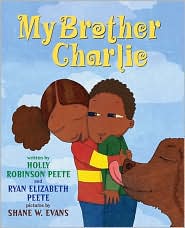
My Brother, Charlie, by Holly Robinson Peete and Ryan Peete
Sunday, October 10, 2010
Guest review of HOW TO READ THE AIR
The following review is from The Happy Nappy Bookseller. Please check out her blog for more reviews, especially of diverse children's and YA novels.
 How to Read the Air by Dinaw Mengestu
This is Mengestu's second novel. His debut The Beautiful Things That Heaven Bears was very well received, with much critical praise. It was also one of my favorite novels of 2007.
Jonas Woldemariam was the first person in his family born in the United States. His parents are from Ethiopia. Jonas didn't have great relationship with them. Now in his 30's Jonas decides to retrace his parents life in America beginning with a road trip.
In his verison Jonas imagines a better outcome for his parents. He dreams for them if only for a moment. Mengestu's writing throughout was gorgeous though it was in these moments that I was completely wowed and found myself rereading passages.
The novel alternates between Jonas' story of his parents, his life and failed marriage. Jonas lives in New York. He meets his wife Angela working at a refugee resettlement center, while punching up (the sadder the better) immigrants' stories in hopes of getting them American citizenship.
Thanks to the book synopsis I knew Jonas got divorced. The author put so much care into Jonas relationship, I still found myself hoping for a different outcome. Though their marriage didn't last, at times Jonas and Angela reminded me of George and Coco from Mama Day by Gloria Naylor. I loved Mama Day and the portrayal of George and Coco, so this is not a comparison I would make lightly.
How to Read the Air is a beautifully layered story. Mengestu is a very talented writer and should not be missed. I can definitely [see] this novel on a few best of lists at the end of the year.
Mengestu talks, in this video, about How to Read the Air. For more, see The New York Times review of How to Read the Air.
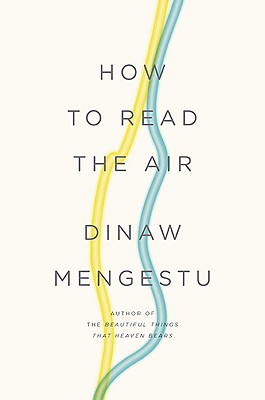
This is Mengestu's second novel. His debut The Beautiful Things That Heaven Bears was very well received, with much critical praise. It was also one of my favorite novels of 2007.
Jonas Woldemariam was the first person in his family born in the United States. His parents are from Ethiopia. Jonas didn't have great relationship with them. Now in his 30's Jonas decides to retrace his parents life in America beginning with a road trip.
In his verison Jonas imagines a better outcome for his parents. He dreams for them if only for a moment. Mengestu's writing throughout was gorgeous though it was in these moments that I was completely wowed and found myself rereading passages.
The novel alternates between Jonas' story of his parents, his life and failed marriage. Jonas lives in New York. He meets his wife Angela working at a refugee resettlement center, while punching up (the sadder the better) immigrants' stories in hopes of getting them American citizenship.
Thanks to the book synopsis I knew Jonas got divorced. The author put so much care into Jonas relationship, I still found myself hoping for a different outcome. Though their marriage didn't last, at times Jonas and Angela reminded me of George and Coco from Mama Day by Gloria Naylor. I loved Mama Day and the portrayal of George and Coco, so this is not a comparison I would make lightly.
How to Read the Air is a beautifully layered story. Mengestu is a very talented writer and should not be missed. I can definitely [see] this novel on a few best of lists at the end of the year.
Mengestu talks, in this video, about How to Read the Air. For more, see The New York Times review of How to Read the Air.
Monday, October 4, 2010
Guest review of THIS I ACCOMPLISH

Harriet Powers was born a slave in Georgia on October 29, 1837. It is assumed that she was raised as a house slave and learned to sew as a child. She is best known for two magnificent story quilts she made after the Civil War. For over 125 years the Bible Quilt and the Pictorial Quilt she stitched have been closely studied for what they could tell historians and museum curators about African American folk art and the lives of slaves after the Civil War. Because she was a slave, scholars assumed she was illiterate. This assumption had often been used by scholars to explain the so called primitive look of the appliqué figures she used on her quilts to tell stories from the Bible and her life.
Powers’ life and quilts seemed to be so well known; Hicks originally intended her book to be a simple annotated bibliography. However, as she pored over the sources she began to notice that some researchers, made statements about Mrs. Powers and her quilts without citing verifiable references. Curious, Hicks decided to make a game of challenging what she read, and like the fictional African American woman detectives she admires in her favorite mystery novels, Hicks began to ask new questions about Harriet Powers and her famous quilts. Questions like: Was Powers really illiterate? What was the exact chain of custody or historical background for each quilt? Had Powers created other quilts and where were they if she had?
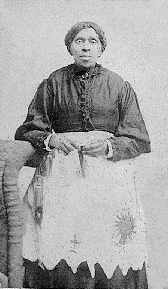
As if to make sure that everyone understood exactly where she was coming from, Powers triumphantly signed her letter: This I Accomplish, Harriet A. Powers.
It is because Hicks decided to ask what she didn’t know as opposed to accepting as fact what others had written that we readers are now blessed to have the full story of both the Pictorial Quilt and the Bible Quilt. We now know in intricate detail the movements of each quilt from one interesting owner to the next on their journey to their final homes in The National Museum of American History at the Smithsonian Institution in Washington D.C and the Museum of Fine Arts in Boston, Massachusetts. In addition, we also get to experience Hick’s joy and astonishment when her hard work and curiosity pays off in the discovery of an incredible letter written by Powers herself. In the letter, the quilter states not only that she was literate but also how she became so. She also declares that she was the creator of at least three other quilts and represented her own artwork at fairs and shows. As if to make sure that everyone understood exactly where she was coming from, Powers triumphantly signed her letter: This I Accomplish, Harriet A. Powers.
The story of the discovery of the letter and the stories of the people who owned the quilts would have been enough to make This I Accomplish special, but Hicks goes above and beyond this. In the second half of the book she presents a complete annotated bibliography including books, articles, poems, plays, exhibits and other media. She also presents timelines that help place Powers and her quilts in context with what was going on in the rest of the world. And as if to pass on the baton of her meticulous research, Hicks offers in the concluding pages of her book, questions and ideas for future historians, museum curators, and quilters to work on. Examples of future projects range from: locating other quilts by Powers, to the petitioning the Postal Service to issue a commemorative stamp celebrating the 185th anniversary of her birth in 2012.
I loved this book. The new research it uncovered about Powers and her life made my heart sing and after a long hiatus of just writing fiction, I felt the need to go back to my first love of quilting. I am deeply grateful to both Kyra Hicks and the magnificent quilt artist, Mrs. Harriet Angeline Powers, for reviving my passion of telling stories with fabric.
About the guest reviewer

Tuesday, July 20, 2010
Guest review of WHO FEARS DEATH
I am grateful to Anika of WriteBlack for this review:

In Who Fears Death, Nnedi Okorafor invites you on a trip to post-apocalyptic east Africa, a world where computers and e-books are mostly just trash, cactus candy is a treat and oceans are considered myths.
If you elect to take the trip, you won’t regret it.
Your guide will be Onyesonwu, a young girl whose name means “Who fears death?,” born to a woman of the Okeke people who is raped by a man of the Nuru, an enemy tribe. Children like Onyesonwu who are products of the two tribes are known as Ewu and are easily distinguished by their sand-colored hair and skin.
Okorafor is best known as a young-adult novelist (The Shadow Speaker came close but did not end my probably unreasonable prejudice against young-adult books). She used this, her first book for adults, to muse on the nature of bigotry, love, faith, sex and independent women -- all wrapped in a shell of magical realism.
Onyesonwu, who is a young child when we meet her, is trying to understand why most people hate her on sight. She’s something of an outcast even in Jwahir, the town where she grows up. Luckily, she’s much loved by her mother, stepfather and eventually Mwita, the mysterious Ewu boy she meets one day. After a fateful decision, she even has three close girlfriends.
Her world has less technology than ours, but is no less complex, especially because everyone she knows accepts the reality and role of juju, or magic, in their lives. Onyesonwu soon finds she has a facility for shapeshifting and traveling between the physical and spirit worlds, so she seeks training from people who know more about sorcery than she.
It is through this training and her exploration of her abilities that she realizes that her Sauron-like biological father, Daib, himself a powerful and violent sorcerer, wants her dead. She spends the next eight years dealing with the ramifications of her discovery and coming to terms with her terrible -- wonderful -- fate.
This is the origin story of a mystical but fatalistic superheroine, driven to redeem her family and her people. She is Jael, in the tent with Sisera, raising a spike. She is Neo, manipulating the Matrix. She is Eli, a vessel for the world’s most important book. She is the Dark Knight, betrayed, but willing to face her fears and her betrayer for the good of others. She is (a more fully developed) Storm, the wind-rider.
She is still a teen with all the confusion native to that state, though. Onyesonwu and the world she inhabits are not pleasant to get to know. Her blistering temper tests the reader’s patience. Violence and rape are everpresent in this world, both thematically and as explicit text. It’s shocking to western eyes when Onyesonwu justifies female circumcision -- a procedure so hated in the western world that it’s been rebranded as genital mutilation -- and even more shocking to read about characters accepting and even anticipating their own eventual deaths.
But Okorafor balances dark with light where she can. When Onyesonwu takes flight over the desert with a dragon-like creature, it’s almost impossible not to feel her wonder. Mwita’s declaration of his love and his quiet steadiness make him as impressive as any romance-novel hero.
Some elements of Who Fears Death are dubious or incredibly frustrating. A secondary character whom we’re meant to take quite seriously at one point intones a phrase that is the chorus to a Schoolhouse Rock song (I won’t spoil the moment for you, but if it doesn’t distract you, you’re a better person than I). Far too much of the story is set in Jwahir, an unfortunate development that makes the final third of the book and the climactic battle seem terribly rushed.
Those failures are minor irritants.
Ultimately, Who Fears Death is a taste of something really good, but not quite delicious. Promising, tantalizing, but just a sprinkle or two of spice away from being truly transcendent.
Grade: B-
If you elect to take the trip, you won’t regret it.
Your guide will be Onyesonwu, a young girl whose name means “Who fears death?,” born to a woman of the Okeke people who is raped by a man of the Nuru, an enemy tribe. Children like Onyesonwu who are products of the two tribes are known as Ewu and are easily distinguished by their sand-colored hair and skin.
Okorafor is best known as a young-adult novelist (The Shadow Speaker came close but did not end my probably unreasonable prejudice against young-adult books). She used this, her first book for adults, to muse on the nature of bigotry, love, faith, sex and independent women -- all wrapped in a shell of magical realism.
Onyesonwu, who is a young child when we meet her, is trying to understand why most people hate her on sight. She’s something of an outcast even in Jwahir, the town where she grows up. Luckily, she’s much loved by her mother, stepfather and eventually Mwita, the mysterious Ewu boy she meets one day. After a fateful decision, she even has three close girlfriends.
Her world has less technology than ours, but is no less complex, especially because everyone she knows accepts the reality and role of juju, or magic, in their lives. Onyesonwu soon finds she has a facility for shapeshifting and traveling between the physical and spirit worlds, so she seeks training from people who know more about sorcery than she.
It is through this training and her exploration of her abilities that she realizes that her Sauron-like biological father, Daib, himself a powerful and violent sorcerer, wants her dead. She spends the next eight years dealing with the ramifications of her discovery and coming to terms with her terrible -- wonderful -- fate.
This is the origin story of a mystical but fatalistic superheroine, driven to redeem her family and her people. She is Jael, in the tent with Sisera, raising a spike. She is Neo, manipulating the Matrix. She is Eli, a vessel for the world’s most important book. She is the Dark Knight, betrayed, but willing to face her fears and her betrayer for the good of others. She is (a more fully developed) Storm, the wind-rider.
She is still a teen with all the confusion native to that state, though. Onyesonwu and the world she inhabits are not pleasant to get to know. Her blistering temper tests the reader’s patience. Violence and rape are everpresent in this world, both thematically and as explicit text. It’s shocking to western eyes when Onyesonwu justifies female circumcision -- a procedure so hated in the western world that it’s been rebranded as genital mutilation -- and even more shocking to read about characters accepting and even anticipating their own eventual deaths.
But Okorafor balances dark with light where she can. When Onyesonwu takes flight over the desert with a dragon-like creature, it’s almost impossible not to feel her wonder. Mwita’s declaration of his love and his quiet steadiness make him as impressive as any romance-novel hero.
Some elements of Who Fears Death are dubious or incredibly frustrating. A secondary character whom we’re meant to take quite seriously at one point intones a phrase that is the chorus to a Schoolhouse Rock song (I won’t spoil the moment for you, but if it doesn’t distract you, you’re a better person than I). Far too much of the story is set in Jwahir, an unfortunate development that makes the final third of the book and the climactic battle seem terribly rushed.
Those failures are minor irritants.
Ultimately, Who Fears Death is a taste of something really good, but not quite delicious. Promising, tantalizing, but just a sprinkle or two of spice away from being truly transcendent.
Grade: B-
Tuesday, May 4, 2010
Guest review of FROM CAPE TOWN WITH LOVE

One of my favorite book bloggers is the Happy Nappy Bookseller. She usually writes about children's & YA books, but she also reads adult fiction. She sent in this review of From Cape Town With Love by Steven Barnes, Tananarive Due & Blair Underwood. I'm reading an advanced copy now and getting a kick out of it.
Please check out the Happy Nappy Bookseller's blog and do check out the Tennyson Hardwick books (watch for upcoming webisodes too!). Everything below is from the Happy Nappy Bookseller:
This is the third Tennyson Hardwick mystery. In the first one, Cassanegra, published in 2007,Tennyson (Ten) is the prime suspect in the murder of a close friend. To clear his name Ten must find the real killer. Prior to that acquisition Ten was getting his life back together. He stopped having sex with women for money and was looking to become a sort after LA actor once again After Ten realizes he has what it takes to be a detective. Tennyson Hardwick is smart, handsome, trained in martial arts and has inherited some his dad's, a retired police captain ability.
In From Cape Town With Love - Ten goes to South Africa to win back his girlfriend's heart back. The two take a trip to Cape Town. The writing places the reader firmly in South Africa and Cape Town. While in Cape Town, Ten accepts a job to bodyguard, Sofia Maitlin, a famous actress while she visits an orphanage to adopt a child. Sofia calls hire Ten again to be work, Nandi. her daughter's A list L.A birthday party.
When Nandi is kidnapped, Ten is the only one who has the skills and connections to get her back. He gets to showcase some of his martial art skills. It's obvious a lot of research went into discussing various martial styles from around the world.
From Cape Town With Love is exciting, sexy and intense. Two best selling authors and an award winning actor have come together to create a series with quality writing and great action. I could definitely see Tennyson Hardwick on the big screen. This is no accident, do check out what Underwood, Due and Barnes have to say about this wonderful series and the roll they play.
In From Cape Town With Love - Ten goes to South Africa to win back his girlfriend's heart back. The two take a trip to Cape Town. The writing places the reader firmly in South Africa and Cape Town. While in Cape Town, Ten accepts a job to bodyguard, Sofia Maitlin, a famous actress while she visits an orphanage to adopt a child. Sofia calls hire Ten again to be work, Nandi. her daughter's A list L.A birthday party.
When Nandi is kidnapped, Ten is the only one who has the skills and connections to get her back. He gets to showcase some of his martial art skills. It's obvious a lot of research went into discussing various martial styles from around the world.
From Cape Town With Love is exciting, sexy and intense. Two best selling authors and an award winning actor have come together to create a series with quality writing and great action. I could definitely see Tennyson Hardwick on the big screen. This is no accident, do check out what Underwood, Due and Barnes have to say about this wonderful series and the roll they play.
Tuesday, March 30, 2010
Guest blog post by Trisha R. Thomas

Everything below is from Thomas:
Since we're on the subject...I've become weary. I know this sounds incredibly silly. Who wouldn't want my job? I'm a published author of several novels that have done quite well with a few awards under my belt.
Yet, every year, I go through the melt down of having to market myself. Time to contact the media, magazines, radio shows, news outlets, and booksellers with hopes of being featured so my book will rise to the top of the very large pile of newly released choices for readers. It's time for me to announce who I am, what I've written and why they should be interested in reviewing my latest great work of art, which inevitably boils down to the color of my skin.
In this day and age, one would think we are past color coding, but it's more prevalent than ever. I've thought about displaying my multi-racial plaque. It seems to be popular and a quick area to move ahead of the pile since President Obama became our leader. But I have too much pride for shuffling race cards. Once that's established I quickly get tossed onto the African American pile, skipping the women's fiction, romance-comedy, and long running series pile. I skip the area of live and laugh out loud characters and become the black author whose subject matter doesn't matter at all. I was asked by a white associate if my next book would still be about black characters. When I told her yes, she seemed disappointed, like she would love to support me, "but ummm, sorry, it's out of my hands."
That's when I realized that it was out of my hands too. I've written characters, with a strong vivid plot whose race didn't matter. Something in the style of Barbara Delinsky, Jude Deveraux, or Susan Elizabeth Phillips who get to write without announcing the color of their character's skin. These manuscripts lay in stacks in my closet. In the past, even to mention that my characters were less than a deep shade of beige, I would be struck down by the all mighty publishing manifesto. Black writers must only and always write about black characters. Please leave my sight until you have repeated this one hundred times. And while you're out, write it down so you won't come back with that foolishness again.
Occasionally, one exception will get past the powers that be. Jericho's Fall by Stephen L. Carter would be a fine example. I'm sure he's also proof that it cannot ever, ever, ever, work, no matter how many degrees you have or what Ivy League institution is your employer. This is the proverbial ONE-WAY street.
Hats off to books like The Immortal Life of Henrietta Lacks, The Help, Secret Life of Bees, and James Patterson's Alex Cross series. Hats off to their publishers who thought nothing of it to publish these black stories by white writers. My only question:
Why aren't these black character driven books sequestered to the African-American section in the bookstores? Why do they get a pass to freely roam about the cabin skipping the colored-only signs entirely? Why do they get to skip the pile?
Don't get me wrong, I am comfortable in my skin. I find it pleasing to the eye and extremely desirable proven by the constant new tanning products introduced every year. But that's only skin. On the inside, we are the same. We experience hurt, rejection, awareness, hope, faith, and rebirth, all the same. The human experience we write about surpasses skin deep motivation. I don't make a judgment whether to buy a book based on the color of the characters on the cover. Is it a good story? Is it recommended? I'm good as long as the lead character doesn't die in the end. That's where I draw the line. I don't discriminate. I read because I love to read. On my bookshelf it's about fifty-fifty of black and non-black writers. There are few white readers who can say the same. I am a black writer hear me roar, or sigh as the case may be.
Signed Trisha R. Thomas
Aka, Weary in Publishing
March 23, 2010 1:52 PM
Signed Trisha R. Thomas
Aka, Weary in Publishing
March 23, 2010 1:52 PM
Subscribe to:
Posts (Atom)