Showing posts with label Nnedi Okorafor. Show all posts

Friday, April 8, 2011

Diverse Book Events

Now this is what I'm talking about! Here's another example of authors taking matters into their own hands. Diversity in YA has brought together a variety of authors to read and sign together. Upcoming tour stops include San Francisco, Austin, Chicago, Cambridge, Mass., New York and San Diego.


Go here for dates and locations and go here for bios of the participants (which includes Varian Johnson, Dia Reeves, Nnedi Okorafor, Jacqueline Woodson, Olugbemisola Rhuday-Perkovich and Rita Williams-Garcia). And if the Diversity in YA Tour comes to your city, please go out and support!

Kudos Cindy Pon and Malinda Lo for putting this together!

Tuesday, February 8, 2011

African American Read In-YA

Update: Zetta Elliott, author of A Wish After Midnight, posted a link to this essay by Neesha Meminger, author of Shine Coconut Moon and Jazz in Love, and it fits so well with this blog post that I have to add it. Please read it.

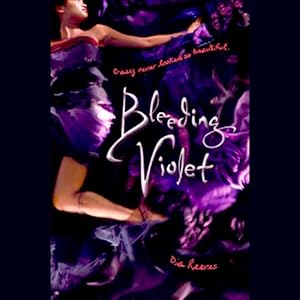
On Sunday, February 20th, The Happy Nappy Bookseller, Reading in Color and Crazy Quilts will be hosting an online read-in of Dia Reeves' novel Bleeding Violet.

It sounds great! Here's what Booklist had to say about the book:
"After her father’s death, 16-year-old Hanna hitchhikes to Portero, Texas, the home of her mother, Rosalee, who abandoned her. Hanna is desperate for Rosalee to love and accept her, and Rosalee reluctantly makes a bargain: Hanna has two weeks to make friends and fit in at her school or she won't be allowed to stay. Hanna has never fit in anywhere, though. Struggling with manic depression, she hears voices and hallucinates, wears only purple dresses, and has a history of violence. Portero is no ordinary town, though, and Hanna learns that it is haunted by doors to other dimensions and plagued by dangerous creatures from those realms. Wyatt, a powerful young initiate in the Mortmaine, a demon-hunting organization, recruits Hanna, and together they struggle to deal with an ancient evil that threatens the town and Hanna’s future. With plenty of sex and violence, this is a book for mature teens, who will find Portero to be an intriguing world and biracial Hanna a startlingly unusual heroine with a poignant, memorable voice. Grades 10-12"


And while you're at it, check out this essay about diversity in YA fiction, or the lack thereof, or the perceived lack thereof, on Kirkus Reviews' YA blog.

Nnedi Okorafor, author of The Shadow Speaker (of which Ursula K. Le Guin said, "There's more vivid imagination in a page of The Shadow Speaker than in whole volumes of ordinary fantasy epics.")
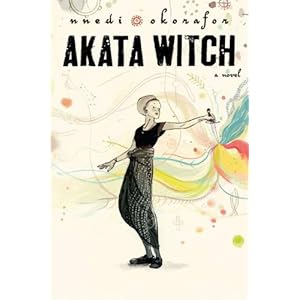
and the forthcoming Akata Witch, responded on Twitter saying, amongst other things: "i bristle when i hear that question of "Where are the people of color in popular YA literature?"... i don't write only for people of color... i am a Nigerian American writer who writes stories from her perspective and imagination for all readers...otherwise, great article. this stuff needs to be highlighted and discussed."

For those looking for African American YA books, here's a list published by the Winter Park Public Library. Here's Publisher's Weekly's list of African American children's and YA books published last fall and to be published this spring. And here's Color Online's list of "great YA by and about women of color."

Pick out a few and join the 2011 POC (people of color) Reading Challenge.

Tuesday, July 27, 2010

July links

Since I'm busy overpacking for the National Association of Black Journalists' Conference in San Diego this weekend, I just have time for links. Luckily, there's lots of interesting stuff to link to!

If you're a woman writer, you probably know about SheWrites.com. (And if you didn't, now you do.) There's been lots of discussion about race & writing & publishing there, including:

A call for action from one of the SheWrites founders.

A black author asks for help from white people. Some people think it's funny. Some don't.

After Tayari Jones called for readers to "rise up," a white author starts to question what's going on with racial divisions.

Some other links:

Interesting interview with Nnedi Okorafor (whose book Who Fears Death Anika reviews below).

NPR reviews Bernice McFadden's Glorious.

Many congratulations to Olufunke Grace Bankole on winning the Glimmer Train new writer award!

Huffington Post names the most anticipated books of the rest of 2010.  I'd be curious to know: what books are you eagerly anticipating?

Tuesday, July 20, 2010

Guest review of WHO FEARS DEATH


I am grateful to Anika of WriteBlack for this review:

In Who Fears Death, Nnedi Okorafor invites you on a trip to post-apocalyptic east Africa, a world where computers and e-books are mostly just trash, cactus candy is a treat and oceans are considered myths.

If you elect to take the trip, you won’t regret it.

Your guide will be Onyesonwu,  a young girl whose name means “Who fears death?,” born to a woman of the Okeke people who is raped by a man of the Nuru, an enemy tribe. Children like Onyesonwu who are products of the two tribes are known as Ewu and are easily distinguished by their sand-colored hair and skin.

Okorafor is best known as a young-adult novelist (The Shadow Speaker came close but did not end my probably unreasonable prejudice against young-adult books). She used this, her first book for adults, to muse on the nature of bigotry, love, faith, sex and independent women -- all wrapped in a shell of magical realism.

Onyesonwu, who is a  young child when we meet her, is trying to understand why most people  hate her on sight. She’s something of an outcast even in Jwahir, the town where she grows up. Luckily, she’s much loved by her mother, stepfather and eventually Mwita, the mysterious Ewu boy she meets one day. After a fateful decision, she even has three close girlfriends.

Her world has less technology than ours, but is no less complex, especially because everyone she knows accepts the reality and role of juju, or magic, in their lives. Onyesonwu soon finds she has a facility for shapeshifting and traveling between the physical and spirit worlds, so she seeks training from people who know more about sorcery than she.

It is through this training and her exploration of her abilities that she realizes that her Sauron-like biological father, Daib, himself a powerful and violent sorcerer, wants her dead. She spends the next eight years dealing with the ramifications of her discovery and coming to terms with her terrible -- wonderful --  fate.

This is the origin story of a mystical but fatalistic superheroine, driven to redeem her family and her people. She is Jael, in the tent with Sisera, raising a spike. She is Neo, manipulating the Matrix. She is Eli, a vessel for the world’s most important book. She is the Dark Knight, betrayed, but willing to face her fears and her betrayer for the good of others. She is (a more fully developed) Storm, the wind-rider.

She is still a teen with all the confusion native to that state, though. Onyesonwu and the world she inhabits are not pleasant to get to know. Her blistering temper tests the reader’s patience. Violence and rape are everpresent in this world, both thematically and as explicit text.  It’s shocking to western eyes when Onyesonwu justifies female circumcision -- a procedure so hated in the western world that it’s been rebranded as genital mutilation -- and even more shocking to read about characters accepting and even anticipating their own eventual deaths.

But Okorafor balances dark with light where she can. When Onyesonwu takes flight over the desert with a dragon-like creature, it’s almost impossible not to feel her wonder. Mwita’s declaration of his love and his quiet steadiness make him as impressive as any romance-novel hero.

Some elements of Who Fears Death are dubious or incredibly frustrating. A secondary character whom we’re meant to take quite seriously at one point intones a phrase that is the chorus to a Schoolhouse Rock song (I won’t spoil the moment for you, but if it doesn’t distract you, you’re a better person than I). Far too much of the story is set in Jwahir, an unfortunate development that makes the final third of the book and the climactic battle seem terribly rushed.

Those failures are minor irritants.

Ultimately, Who Fears Death is a taste of something really good, but not quite delicious. Promising, tantalizing, but just a sprinkle or two of spice away from being truly transcendent.

Grade: B-