Showing posts with label Trisha R. Thomas. Show all posts

Monday, August 16, 2010

A black author reviews The Help

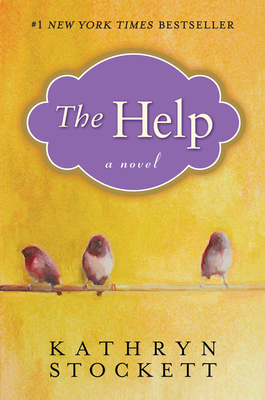
I haven't read The Help, Kathryn Stockett's book about maids in the south. But I'm definitely aware of it as a phenomenon and as a lightning rod for debate. It raises a lot of questions. Would a similar book by a black author have done as well? Should a white writer write about black characters, and how can you write about other ethnicities well? Is it a good portrayal of black people or are the maids stereotypes? Etc.

So I was curious when author Trisha R. Thomas said on her Facebook page that at first she put the book down, but picked it back up and was glad she did. I asked her to blog a review. I confess I put the book down very early on because I couldn't get past a black maid carrying on about how much she loved the white children she was raising. (And, yes, novelist jealousy might have had a little something to do with it too.)

For the record, I believe all writers have the right to tell stories about people different from them.  But I believe part of the reason this book did so well was because the author was white. I have a hard time imagining the word of mouth would have been as great if the author were black. If only because if the author were black, most of y'all wouldn't have even been told about the book.

I'd be curious to hear your take. Have you read it? What did you think of it?

The following review is from Trisha R. Thomas, the author of the Nappily Series. Her sixth novel Un-Nappily In Love continues with the spirited character, Venus Johnston who bucks the status quo and starts living for the beauty within, instead of what’s on the outside.

Below her review are some books by black authors that get mentioned in the same breath as The Help and The Secret Life of Bees (a book I liked), but so far haven't taken off the same way those books have. I'd also like those of you who read The Help to tell me what other books would you suggest?

The Help, review by Trisha R. Thomas

I was one of the many who judged a book by it’s color. What would a white woman know about the black experience, and why did she feel the need to write on the subject. The choice most likely wasn’t a choice at all. We are who we are. The old adage of write what you know feels powerfully at work here. The author, Kathryn Stockett spent the first sixteen years of her life, nearly everyday with a black woman who took care of her. That woman was her maid, Demitrie. Initially, she sought to write through Demitrie’s voice. Instead the result became “The Help”, a fictional account of Jackson, Mississippi in the 60’s. Pre-civil rights, during the unfolding of a tumultuous time for the south.

"Caring whether or not the author is black or white seems of no substance now." 

Kathryn Stockett’s first novel opens with the voice of Abilene in a Southern accent so strong and improper that I know before the first sentence is complete she has something important to say. She is the lead storyteller of this taboo tale of sisterhood between the help and the white women employers in a time when the color lines were clearly marked too dangerous to cross. Soon I will hear another maid, Minny, her voice strong and spirited, raising her children with a husband who is drunk by sundown. Abilene and Minny captured my heart and ear. These were the voices that brought me back to the novel countless times when I’d given up lost in the swirl of names and activities of the Junior League of white women. Who stole who’s boyfriend? Who married who? Sharp tongued characters that blurred into one, two, three, or four at voices at time. After all, once the League ladies got together to play bridge, or plan their next big party, their topic discussion always landed on the “uncleanliness of the nigras” who by the way cooked their food, took care of their children, and waited on them hand and foot. Enough reason at any given time to throw in the towel. 

And then there was Skeeter, also in the League of gentle-women. The trouble begins with Skeeter, bored and suffocating under the rigid expectations of her southern upbringing. She returns home from college without a husband and no prospects. Hair too frizzy, reed tall, and short on patience with the town’s pent up old ways, she turns her attention to having a career, unlike the other society climbing women. Luckily the local paper will give her a shot. She’ll become the new Miss Myrna, answering mail in the weekly column giving tips on housecleaning and tackling tricky issues like water stains, and silver polishing techniques. Of course she doesn’t know a thing about house cleaning. Skeeter approaches her best friend’s maid, Abilene, to give her cleaning tips. The beginning of a new relationship. Cleaning tips turn into stories. Nights are spent taking notes of Abilene’s experiences.

Everything that lies in the middle seems to disappear waiting for Abilene to speak again. To hear Abilene mourn the loss of her only son. Filling in the void with each white child she nursed and mothered. Watching the children grow into young adults with the morals she’s instilled in them more so than their own parents. 

There were moments gripped with fear and anger. The truth of the times can’t be avoided. One point of the finger and a maid could go to jail, accused of stealing a piece of silver. Their lives were not their own. Held hostage at the whim of their employers.

It’s true that readers are a narcissistic bunch. We find the characters who most resemble us and our thoughts to agree with, cheer for, and feel for in their deepest pain. We celebrate their victories as our own. The Help tells an honest story of women taking a chance and stepping out of old beliefs. You can’t help but love a story when the ones you care about win in the end. Caring whether or not the author is black or white seems of no substance now. Would a black author have experienced living with a maid all her life and know the life of Skeeter, Abilene, or Minny? I don’t know about you, but my only care giver was my mother and the public school system. I’m black, an author, and could not have written The Help. We are who we are. This novel struck the nerves of both black and white readers. It especially hit mine remembering my first novel and being judged as not “black enough” What did I know about nappy? How dare I write on the subject at all? I soldiered on, ignoring the critics. I wrote what I knew to be true from my experiences. We write what we know. If we’re lucky, we do it well. Judging a book by it’s color has to end somewhere. We have to be the change we want to see in others. Open minds mean open pages. The door needs to stay unlocked for all of us. Freedom to write whatever we want. Freedom to read whatever, whomever we want.

Liked The Help? Try these

O Magazine recently called Glorious by Bernice McFadden's this season's breakout like The Help. (The O review is here.)

I still wish more people would read the heartwarming The Air Between Us by Deborah Johnson (reviewed here). I just recently reread it and it was even better the second time around.

While Lori Tharps' Substitute Me is about a black nanny working for a white family, it takes place in modern day New York and the black nanny in the story is middle-class and educated. (Watch for a Q&A with Lori here next week when Substitute Me pubs.)


Sunday, May 30, 2010

Serious about series

Not too long ago I reread all the Harry Potter books. It was such a joy to have a month or 6 weeks of books all set in the same world with the same characters. I think that's the appeal of the series--familiarity. If the writer can pull it off without the reader feeling like he's reading the same book over and over.

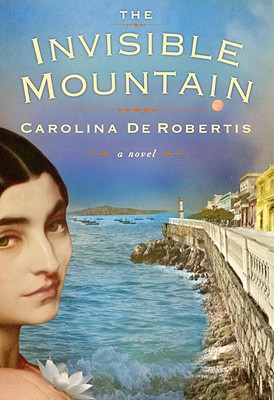
Right now I'm reading The Invisible Mountain by Carolina de Robertis (Did you know May was Latino Books Month? By the way, the paperback of The Invisible Mountain is out this August). When I'm done with my current TBR pile (see last week's post), I'm thinking I'd like to read another series, and I'm looking for suggestions. Anybody have any good ideas? Series by black authors not required, but definitely appreciated.

Series seem to be most common in genre works, though Trisha R. Thomas has her women's fiction series featuring her protagonist Venus. The sixth (sixth!) is out now, Un-Nappily in Love. And Pearl Cleage often writes in her novels about characters in Atlanta's West End neighborhood, with characters from different books mingling together.

Can anyone think of any other commercial or literary fiction that's a series? What do you all think is the best:

Romance series?

Fantasy/sci-fi series?

Paranormal series?

Mystery series?

Other categories?

Tuesday, March 30, 2010

Guest blog post by Trisha R. Thomas

Last week's essay from Margaret Johnson-Hodge sparked this response from Trisha R. Thomas. (Thank you Margaret! That is a first here on the blog!) Thomas is author of the "Nappily" series of books. The first of which, Nappily Ever After, was optioned for a feature film by Halle Berry. The latest Un-Nappily In Love is available for pre-order and will be out in May.

Everything below is from Thomas:


Since we're on the subject...I've become weary. I know this sounds incredibly silly. Who wouldn't want my job? I'm a published author of several novels that have done quite well with a few awards under my belt.

Yet, every year, I go through the melt down of having to market myself. Time to contact the media, magazines, radio shows, news outlets, and booksellers with hopes of being featured so my book will rise to the top of the very large pile of newly released choices for readers. It's time for me to announce who I am, what I've written and why they should be interested in reviewing my latest great work of art, which inevitably boils down to the color of my skin.

In this day and age, one would think we are past color coding, but it's more prevalent than ever. I've thought about displaying my multi-racial plaque. It seems to be popular and a quick area to move ahead of the pile since President Obama became our leader. But I have too much pride for shuffling race cards. Once that's established I quickly get tossed onto the African American pile, skipping the women's fiction, romance-comedy, and long running series pile. I skip the area of live and laugh out loud characters and become the black author whose subject matter doesn't matter at all. I was asked by a white associate if my next book would still be about black characters. When I told her yes, she seemed disappointed, like she would love to support me, "but ummm, sorry, it's out of my hands."

That's when I realized that it was out of my hands too. I've written characters, with a strong vivid plot whose race didn't matter. Something in the style of Barbara Delinsky, Jude Deveraux, or Susan Elizabeth Phillips who get to write without announcing the color of their character's skin. These manuscripts lay in stacks in my closet. In the past, even to mention that my characters were less than a deep shade of beige, I would be struck down by the all mighty publishing manifesto. Black writers must only and always write about black characters. Please leave my sight until you have repeated this one hundred times. And while you're out, write it down so you won't come back with that foolishness again.

Occasionally, one exception will get past the powers that be. Jericho's Fall by Stephen L. Carter would be a fine example. I'm sure he's also proof that it cannot ever, ever, ever, work, no matter how many degrees you have or what Ivy League institution is your employer. This is the proverbial ONE-WAY street.

Hats off to books like The Immortal Life of Henrietta Lacks, The Help, Secret Life of Bees, and James Patterson's Alex Cross series. Hats off to their publishers who thought nothing of it to publish these black stories by white writers. My only question:

Why aren't these black character driven books sequestered to the African-American section in the bookstores? Why do they get a pass to freely roam about the cabin skipping the colored-only signs entirely? Why do they get to skip the pile?

Don't get me wrong, I am comfortable in my skin. I find it pleasing to the eye and extremely desirable proven by the constant new tanning products introduced every year. But that's only skin. On the inside, we are the same. We experience hurt, rejection, awareness, hope, faith, and rebirth, all the same. The human experience we write about surpasses skin deep motivation. I don't make a judgment whether to buy a book based on the color of the characters on the cover. Is it a good story? Is it recommended? I'm good as long as the lead character doesn't die in the end. That's where I draw the line. I don't discriminate. I read because I love to read. On my bookshelf it's about fifty-fifty of black and non-black writers. There are few white readers who can say the same. I am a black writer hear me roar, or sigh as the case may be.

Signed Trisha R. Thomas

Aka, Weary in Publishing

March 23, 2010 1:52 PM