Showing posts with label White readers meet. Show all posts

Thursday, January 5, 2012

Meet: Jacqueline Luckett, author of Passing Love

Our first "White Readers Meet" Q&A of 2012 is with Jacqueline Luckett, author of Searching for Tina Turner. She's here to tell us about her new book Passing Love, which getting lots of other good buzz! The glowing Publisher's Weekly review called it "a dreamy and lyrical paean to all things French..."

Contest!

Passing Love hits stores (and e-readers) January 25th. But Jackie is offering WRMBA readers an incentive to pre-order. She's going to send a lovely journal to the first 10 people who pre-order and email proof of receipt to info AT jacquelineluckett DOT com!

Passing Love is a story about a woman who has had a lifelong dream to go to Paris. She goes and discovers more than she imagine. Win one of the free journals and use it to reflect on your own life and dreams.

On to the Q&A with Jackie:

White Readers Meet Black Authors: Tell us about your new book. What's the plot? Who are the characters?

Jacqueline Luckett: The new novel is titled PASSING LOVE. It’s quite different from Searching for Tina Turner, and I hope that readers will enjoy. The story alternates between two very different women. Publisher’s Weekly wrote a lovely review. The novel will be a Good Housekeeping February Book Pick.

Moving back and forth in time between the sparkling Paris of today and the jazz-fueled city filled with expatriates in the 1950s, PASSING LOVE is the story of two women dealing with lost love, secrets, and betrayal and how the City of Light may hold all of the answers.

In the present day, Nichole-Marie Handy has loved all things French since she was a child. After the death of her best friend, determined to get out of her rut, she goes to Paris, leaving behind a marriage proposal. Ruby Mae Garrett lives in rural Mississippi in the late 1940s. Ruby believes that she is destined for a big life, and she’s determined to make sure that happens.

"Without fail, each woman had (or was forced) to decide what came next. The only way to figure that out is to take a journey to self. We have to re-discover ourselves, make choices about what comes next, re-invent who we are, and move forward. A hero’s journey is the crux of a good story. I like to show that an emotional journey is just as interesting as a physical one."

WRMBA: Why France? You wrote about it some in Searching for Tina Turner, and now more in Passing Love. Were you French in a past life?

JL: Good question. I’m not sure where the fascination comes from. It’s been a part of me my whole life. My father was in the Army and spent some time in France. The only thing I recall him telling me about his time in France was that the French treated the black American soldiers better than their own countrymen. Both my sister and I have French names, so I figure that something rubbed off on him.

It wasn’t my intention to write about France in Searching for Tina Turner, but once I discovered that she makes her home in the South of France, my character had to go there.

My original idea for PASSING LOVE was to write about an American woman who wanted to make a change in her life and live abroad. Since I was so familiar with France and had spent time in Paris—I decided to write about what I knew. That’s what all the books tell us to do. So, Paris was my logical choice for an ex-pat.

The story changed, as your readers will find out, but it all takes place in Paris.

I once asked a psychic why she thought I was so fascinated with France. She told me that in a past life I was French royalty. Hmmm. I didn't take much stock in her reading, though it does make sense if you believe that we have past lives. Her theory was that I had unfinished business. You could say that I’m taking care of that business in this life.

I studied French in high school, a couple of years in college and now I take weekly lessons. I can understand and make myself understand when I’m in France. I’ve traveled to France several times, and I feel comfortable there. It’s weird, but I learned long ago to roll with it. And look what it’s done for me!

WRMBA: You seem to write a lot about women finding themselves. Why do you think that is?

JL: I want my characters to mirror real life, and “finding” is what all of us will have to do at some point in our lives.

When I first started writing Searching for Tina Turner, I was lost. I mean that in the emotional sense, of course. I still had a home, friends, and my mother lives in a nearby city. I’d just gotten divorced. After all the “dust” settled, I was determined to make a new life for myself.

It took a while to figure out my direction and it occurred to me that other women were probably on the same emotional roller coaster. I spoke to quite a few women who were divorced or in the middle of one. Most were baby boomers with “empty nests.” They all described this feeling of being lost. Disconnected might be a better word. Some of those feelings came from no longer being grounded by children; some from having to start all over again in midlife. I’ve only known of one woman who supposedly planned out her departure from her marriage, but I’m sure she still had to take this same journey to self.

In most cases, divorce, and the lifestyle change, was unexpected. Without fail, each woman had (or was forced) to decide what came next. The only way to figure that out is to take a journey to self. We have to re-discover ourselves, make choices about what comes next, re-invent who we are, and move forward. A hero’s journey is the crux of a good story. I like to show that an emotional journey is just as interesting as a physical one.

WRMBA: You know a bit about wines, I believe. What type of wine(s) would you recommend to readers to enjoy as they read Passing Love?

JL: This is my all time favorite question!

I enjoy wine and recently took a Wine Tasting class to refresh my skills and expand my interest in European wines. Besides champagne (only the French can use this appellation) and sparkling wines (describes the bubbly from any other country), California wines remain my favorite. Frankly, I’m torn. For white wines, I love robust, creamy Chardonnays with a lot of oak. Full-bodied, fruity cabernets, merlots, and zinfandels are my favorite reds, in that order.

At the beginning of PASSING LOVE, Nicole pulls out a bottle of 100-year-old tequila to celebrate her trip. In Paris, she’s introduced to red wine. Ruby doesn’t drink; she’s in love with strong French coffee with lots of milk.

I suggest a combo. A nice shot of your favorite tequila—and a good one is smooth and worth sipping. Since the first two chapters introduce Ruby and Nicole, tequila works well. Then I’d switch to a nice Chardonnay for the rest of the book. Switch to a cabernet when Nicole does.

Finish with a glass of your favorite bubbly—that’s what I intend to do!

WRMBA: What's next for you?

JL: I’ve got several ideas brewing that I want to turn into reality. Novel number three, for sure. (This book will not even have the word Paris in it, but my fingers are crossed behind my back.) I sketched a lot of scenes in a frenzied month-long NaNoWriMo (National Novel Writing Month) writing spree.

A few readers have asked about a sequel to Searching for Tina Turner, but unless there’s a lot of demand, I don’t expect to write one (never say never, right?). I’d like to see the novel turned into a movie or a Broadway musical. I’m keeping my fingers crossed for either one of those dreams to come true.

This past summer, I took a class at Berkeley Repertory Theater and wrote a one-act play. At the end of the class, we staged public readings in front of a small group of my friends. It was exciting to hear my words read out loud. I’m going to look for theaters and try to get the play produced.

I have an idea for a screenplay that I’ll probably outline in 2012.

So, I have a lot of ideas. What’s next? Implementation. And maybe, Paris.

WRMBA: What's the best book (or who’s the best writer) that not enough people know about?

JL: Best is hard to say, because I’ve read so many beautiful books by authors well- and little-known. Dianne McKinney-Whetstone is a writer I love. Though she’s received a lot of awards, few people I speak to seem to know her work. I’ve read four of her five novels and loved them all. She lives in Philadelphia and her novels take place there.

McKinney-Whetstone inspired me. Before I started writing, I read an article of how she worked full-time and managed her family, then wrote in the wee hours at her kitchen table. I’m not sure if the story is true, but as a working mother, it gave me hope.

She may be better known than I think, but I haven't seen anything new from her in a while. I checked her website and I see she teaches at the University of Pennsylvania. I don’t see a new novel listed. I wonder if she’s writing.

If I could mention another author, it would be Emily Raboteau (The Professor’s Daughter).

Thanks, Carleen for this opportunity.

WRMBA: You're very welcome! Thank you for telling my readers a little about you and your work!

Monday, October 3, 2011

Meet: Patricia Raybon

Today, I'd like to introduce you to my friend Patricia Raybon, another Colorado-based writer and author of one of my all-time favorite memoirs, My First White Friend: Confessions on Race, Love and Forgiveness. This Q&A discusses her two new books. (I was honored to receive copies of them and especially enjoy the lovely coffee table book Bound for Glory.) I think you'll get a real feel for her as a person and a writer here, and once you do, I know you'll want to check out her work.

White Readers Meet Black Authors: Tell us about your latest work(s).

Patricia Raybon: I write memoirs. My two new books, however, shake me out of that box. God’s Great Blessings is a One Year® devotional—or a daily study guide—published by the Christian publisher Tyndale House for its One Year® brand. It explores 52 virtues that God promises to bless. A life-changing project. I loved wrestling over this subject and writing it!

My second book, Bound for Glory, also from Tyndale, is a beautiful tribute to African American spirituals. A full-color gift book, Bound for Glory features the art of renown calligrapher Timothy Botts, with me acting as contributor. But Tim desired a Black voice on the pages, that is, so he invited me to collaborate. The book showcases 52 illustrations by Tim of 52 spiritual songs, plus his reflections on 26 of his pieces along with a Bible verse. For the other 26 illustrations, I wrote short reflections in free verse—a new format for me. More than anything, the book honors the African slaves in America who wrote this amazing music, and Tim did an astounding job telling this story through art. So it’s a stunning book. Great for showing off on coffee tables and book shelves. But the message inside is one of deliverance and hope. It’s truly a gorgeous book.

WRMBA: What are your goal(s) as a writer? Do you set out to educate? Entertain? Illuminate?

PR: I write to learn. Then I share what God is willing to teach me. With my first memoir, My First White Friend, I set out to learn how to forgive. The surprise? First I needed to forgive myself. Then with my second book, I Told the Mountain to Move, I vowed to learn how to pray. I grew up in church, but didn’t have a clue what prayer was. Writing a book to figure out a spiritual mystery—like prayer or forgiveness—changes my life. Readers tell me the books change their lives, too. My First White Friend came out in 1995. But people still read it to learn how to forgive. The same is true for Mountain regarding prayer. I give talks all over the country now on both prayer and forgiveness. Writing to learn has made all of that possible.

"I try to honor the dignity of that human spirit in my writing. So I try to give readers my best. To respect readers’ intelligence. To never talk down to an audience—whether they’re teen felons in a county jail or senior citizens in a church."

WRMBA: How does your faith inform your writing?

RP: It inspires me, first, to keep going. To stay with it. To finish the writing. To stay in the race—and if I fall out of my lane, to get back in it. This going the distance is central to the theology of Christianity. We follow a Savior who didn’t turn back, not from his calling—or even his crucifixion. In my own life, as a writer, the example of Christ inspires me to stay in the game. I love that about my faith.

Secondly, of course, my faith inspires what I write. My focus is spirituality, regardless of the topic. I did a piece on cleaning my windows for The New York Times Sunday Magazine, but the focus was spirituality. My faith is my life. As a writer, I aim to show that connection.

WRMBA: You went from journalism to writing books. Does your experience as a journalist affect your writing?

RP: It keeps me grounded. As a journalist, I wrote feature articles—called human-interest stories—most of my career. But even the feature pages of a newspaper focus on real life. And life is complicated. Life is hard. Life can be heart-breaking. But life is good! So people display amazing resilience, imagination, and downright sheer guts to make the journey the best way they can.

I try to honor the dignity of that human spirit in my writing. So I try to give readers my best. To respect readers’ intelligence. To never talk down to an audience—whether they’re teen felons in a county jail or senior citizens in a church. Both these groups deserve my best, from the story and message to the spelling and grammar. Journalism is a big part of why that matters to me.

WRMBA: I know you’re taught writing at the university level and you do workshops now. What advice would you give to a new writer?

RP: Figure out who you are. Your writing voice lives in that identity. In fact, your different identities—and everybody has several, depending on your life and where you are in it—is where your writer’s voice resides. I’m a journalist, yes, and I have written in that voice many times. But I’m also a wife and mom, and I’ve written and sold scores of personal essays about the complications and challenges of those relationships. In fact, my second memoir, I Told the Mountain to Move, is on prayer, but I wrote it as a wife—because the story takes place when my marriage is at a low point and, at the same time, my husband was critically ill. I had to learn to pray for my husband—but also learn again to love him—and write about it. Married Christian women really relate to that book!

A lot of aspiring writers run from who they are—and what they’re dealing with in life. But our stories reside in those places and spaces. Own up to your life! Walk in it. Write it!

WRMBA: What’s next for you?

RP: With God’s good help, I hope to develop a detective series with a faith angle. I finished a draft and got good suggestions back from my publishing house. So I’m excited to rework it—to start fresh and give it another go.

I’m also starting to blog again about life as a black writer of faith who works at home. I love every part of that description. So stay tuned.

Meantime, I’m having fun releasing my new books.

WRMBA: What’s the best book (or who’s the best writer) that not enough people know about?

RP: Great question! Surprising answer? The Holy Bible. I finally read it all. After a lifetime in church, I finally read the whole thing. And what did I learn? That everything I wanted to know about writing, and about life, is right there. Highly recommended!

Blessings and thanks to you, Carleen. Much peace and love.

WRMBA: Thank you for Patricia for your time! Can't wait to read that detective series!

Saturday, March 12, 2011

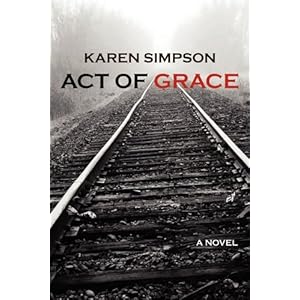
Meet: Karen Simpson, author of ACT OF GRACE

It is my great pleasure to present published author Karen Simpson! Karen was the first person to comment on my personal blog years ago, and will always hold a special place in my heart for marching into her local Borders and asking where the heck my novel was when she didn't see it in their inventory. Turns out it was right on the shelf and no one in the store would have known that without Karen's intervention. So I am thrilled that I can return the favor and march onto the internet and tell folks go get Act of Grace! Congratulations Karen on the publication of your first novel!

Q&A with Karen:


White Readers Meet Black Authors: Tell us about Act of Grace (read an excerpt here). How did you come to write this story? What subjects/themes do you explore? What's your writing style like?

Karen Simpson: First, I would like to thank you for this opportunity. I always dreamed of appearing as an author on your blog so I’m truly excited to do this interview.

Act of Grace is the story of Grace Johnson a bright, perceptive African American high school senior who saves the life of a Klansman named Jonathan Gilmore. Everyone in her hometown of Vigilant, Michigan wants to know why. Few people, black or white, understand her act of sacrifice especially since rumor holds that years ago a member of the Gilmore family murdered several African -Americans including Grace’s father. Grace wants to remain silent on the matter but Ancestors spirits emerge in visions and insist she fulfill her shamanic duties by bearing witness to her town’s violent racial history so that all involved might transcend it.

Grace begins a journal, but she warns readers upfront that if they are looking for a simple or rational explanation for her actions then they need to look elsewhere. She knows that her accounts of her ability to speak to the dead, along with her connections to a trickster spirit name Oba, will be hard for most people to believe. With insight shaped by the wisdom found in African American mythology and the book, The Velveteen Rabbit, Grace recounts a story of eye-for-an-eye vengeance that has blinded entire generations in her hometown.

Act of Grace is loosely based on an incident that happened several years ago in my hometown during a Klan rally. When what was supposed to be a nonviolent protest became violent, a young black woman saved a white man, (whose was simply wearing a confederate flag T-shirt), from being beaten by throwing her body over him. She got involved because she believed he had the right to his beliefs even if she and others felt he was wrong. For weeks after the event people argued about whether she was a guardian angel or just crazy. My opinion was that she was a compassionate and brave person, worthy of admiration and respect for living up to her values. Five years after this rally I had a very vivid dream about a young woman named Grace and during the dream she yelled out what is more or less the first line of the novel.

My novel fits in with my lifelong interest in how some people are able to forgive what seem to be unforgivable acts and deeds and the subjects of altruism and justice. Especially justice, because while I believe it is my duty as an artist and writer to illuminating injustice, I also believe it is my duty to acknowledge how complicated and sometime messy getting justice is.

WRMBA: What's your goal(s) as a writer? Do you set out to educate? entertain? illuminate?

KS: I set out to illuminate but in an entertaining way in my work. Act of Grace deals with serious and violent issues, but I tried to make sure there was as much sweet as bitter in the work. Grace is a strong, willful young woman being sent out to do strong women’s work, but she has an incredible sense of humor and knows or learns how to experience joy even in the mist of sorrow.

WRMBA: What's your biggest surprise-good or bad- (so far) about the publishing biz?

KS: How much of a business writing really is. I was warned up front that it was but I was still surprised how much marketing an author is required to do herself. I’m finding that I’m better at it than I thought though.

WRMBA: What's next for you?

KS: A new, so far untitled, work that one writer friend described as a historical novel with paranormal sprinkles.

WRMBA: What's the best book (or whose the best writer) that not enough people know about?


Dr. Flowers has a new graphic novel from Tara Books called I See the Promised Land on the life of Martin Luther King. He does the telling as a griot, while Patua artist Manu Chitrakar adapts King’s life to his art. Patua artists from Bengal in eastern India are traditional scroll-painters who create vivid art out of all kinds of narratives - from fables and classical tales to contemporary news items. It a wonderful book that gives a new and powerful take on Martin Luther King’s life.

WRMBA: Any advice for aspiring novelists?

KS: If you are serious about getting published, work at writing as you would a career or job. Learn the craft by become a part of critiques groups, go to as many conferences as you can afford. Read all kinds of novels and writing book, but, in addition, read books and blogs about how to conduct the business side of writing. A good book to start with is The Essential Guide to Getting Your Book Published by Arielle Eckstut and David Henry Sterry.

Tuesday, October 19, 2010

Meet: Robert Greer

Robert Greer is a Denver-based novelist and renaissance man (as you'll see). His latest is a prequel to his CJ Floyd mystery series, FIRST OF STATE, which is out today! On Thursday evening, he'll be speaking and signing at the Tattered Cover Colfax Avenue store. I've had the pleasure of meeting him several times and he's a fascinating and lovely person. If you're in Denver, go!


White Readers Meet Black Authors: You also are a practicing physician and a rancher, correct? What made you start writing? When/how do you find time to write?! Do doctoring, ranching & writing have anything in common?

Robert Greer: There are many things that being a doctor, rancher and writer have in common but the two most significant things might well be the fact that each requires a demanding sense of dedication and precision. I’m actually a pathologist and as such, when trying to establish a diagnosis, I have very little margin for error. The same thing goes for ranching. Sending too big a head of water down an irrigation ditch to irrigate hay meadows can result in disaster. A little bit of math and physics expertise and a great deal of common sense are required to irrigate 700-800 acres of hay meadow without taking out half a mountain side. Writing, of course, requires a precision of language and often an ear for dialect. These I suspect are but a few things that the three things you have mentioned have in common.

WRMBA: Tell us about your latest novel.

RG: My latest novel, a prequel to my CJ Floyd mystery series, represents the tenth novel in the series. I wrote FIRST OF STATE after finishing a literary novel SPOON, my brief respite from the mystery and thriller world. I decided on a prequel because I wanted to bring readers up to speed on the central character’s early life. I first introduced CJ in 1996 in THE DEVIL’S HATBAND. At the time of that novel, CJ was forty-four. The reader never really finds out in that book what happened in CJ’s life between the ages of twenty and forty-four except that he’d served two tours of duty as a navy patrol boat machine gunner in Vietnam and that he eventually joined his uncle Ike’s bail bonding business in Denver. FIRST OF STATE fills in much of that twenty-four year void as CJ takes on the task of finding out who killed an antiques collector friend of his. A man he befriended just weeks after coming home from Vietnam. The novel also lets readers see CJ forging long-term friendships and watch him get bitten by the western memorabilia collecting bug. Interestingly as the novel unfolds, CJ ends up solving three cases, not simply one.

WRMBA: Describe your work for someone unfamiliar with it. What's your writing style like? What subjects/themes do you explore?

RG: I think my writing can best be described as character-driven writing that has an associated strong sense of place. I use the backdrop of Denver and Denver’s historically black Five Points community to set most of the novels in motion and have explored everything from the perils of molecular biology and gene splicing gone array in novels like LIMITED TIME and HEAT SHOCK to who might’ve really killed JFK in THE MONGOOSE DECEPTION. In a sense, all of my novels are travelogues that take the reader across the vastness of the American West, allowing them to rub shoulders with, and to find out about, people they might not otherwise encounter in real life.

I’m not sure how to describe my writing style except to say that I was trained formally as a writer and have a Masters Degree in Creative Writing. I suspect academics would argue that there is some of the “academy” in the way I write. I often use language, dialect and certainly dialogue to move a story along and to describe the West, a land that I so much love.

WRMBA: What's your goal(s) as a writer? Do you set out to educate? entertain? illuminate?

RG: I have never really had goals as a writer except to write a book that I am proud of and that I hope people will enjoy. I suspect that I do educate people about certain things although I don’t purposefully start out to do so. I do not use my writing to try and change the world, and I am exceedingly suspicious of people who claim that they not only do but have. There seems to be a certain arrogance to such statements, and although there are clearly documents out there that prove that you can change the world with words (the United States Constitution, for instance) I guess I’m just not arrogant enough to believe that my words equal those of Jefferson.

WRMBA: What's next for you?

RG: I’m always working on a book and typically write one a year. Currently I’m working on a stand-along thriller entitled ASTRIDE A PINK HORSE, a book about revenge which deals with the making and possible triggering of a “dirty nuclear weapon.” That’s probably as much as I should say about the novel right now because I don’t fully have it formulated in my head.

WRMBA: What's the best book (or whose the best writer) that not enough people know about?

RG: I would recommend that readers read “Cemetery Road” a mystery by Gar Anthony Haywood. The book is a great mystery and Gar is a wonderful great writer and friend. For those who have not read him, I think you’re in for a treat.

Tuesday, August 24, 2010

Meet: Lori Tharps, author of SUBSTITUTE ME

This is what I had to say about Substitute Me, Lori Tharps' great new novel out now:

"Book clubs: Substitute Me one will give you so much to talk, laugh and argue about, you might want to schedule two meetings to discuss it. Days after finishing it, I'm still debating who the villain is. Lori Tharps has written a timely, engaging page-turner that every working mom in America should read!"
Carleen Brice, author of Children of the Waters


Below is my Q&A with Lori, which hopefully gives you more of a taste about what her book is like. If you'd like more of an idea listen to blogger Evelyn N. Alfred read a snippet (and then follow her advice and go to your local bookstore and buy it).

White Readers Meet Black Authors: What's Substitute Me about?

Lori Tharps: This is a story about a young, career-driven woman who is about to go back to work so she hires a full-time nanny for her infant son. The woman happens to be white and the nanny happens to be black. The story takes place in modern-day brooklyn and simply documents the lives of both women and the people in their lives. In essence, the story tries to show what can happen when one woman hires another woman to perform her most intimate tasks -- caring for her child, home and ultimately her husband. Throw in some issues of race and class and you've got a really packed domestic drama.


WRMBA: There was an article in the NY Times recently about nanny fiction (a new genre?). How would you compare your book to The Help or The Nanny Diaries (which I know are two completely different types of books)?

LT: I actually have been using both of those titles to contextualize my book. Like The Nanny Diaries, Substitute Me takes place in modern day New York where nanny culture is quite common and it is just expected that most working women -- and many women of leisure-- will employ a nanny. On the other hand, the issue of black women working as domestics for white women also plays a role in my book, as it does in The Help. Just because the year is 1999 and not 1959 doesn't mean that the tinderbox of racial tensions doesn't exist between employer and employee, and I try to show that in my story.


WRMBA: Like me, you started with nonfiction. What do you think is different about writing fiction? does one form come easier to you?

LT: The thing I love about writing fiction is that if a quote doesn't sound right, I can just change it to make it sound better without having to go back out and doing more reporting. But I still think that old cliche, 'truth is stranger than fiction' is true in that I can't make up a better story than what's happening in the world right in front of me. I feel blessed that I can do both.

WRMBA: On your website you talk about changing minds. What's your goal(s) as a writer? Do you set out to educate? Entertain? Illuminate?

LT: Can I say all three? Really. I don't think I'm talented enough yet to write the book that will change the world...and damn it The Secret has already been written...but I hope that with the stories I share, be they true or invented, they will be entertaining enough that people will want to read them, and by the time they finish they'll have changed their thinking in some way or learned something about the human condition. And it doesn't have to be a big change, just one little a-ha moment would be good enough.

WRMBA: Who's the audience for your novel?

LT: Women. All women, regardless of ethnic background. If I had to pick the category for Substitute Me, I'd say women's fiction. I honestly don't think many men would pick this book for themselves, although my husband did enjoy it very much. But then again, he kind of had to.

WRMBA: What's next for you? More fiction or back to nonfiction?

LT: I am actually working on a YA novel right now about a biracial girl whose mother forces her to give up her dream of being a ballerina. And then because I make my living as a journalism professor, my next book will definitely be non-fiction.

WRMBA: What's the best book (or whose the best writer) that not enough people know about?

LT: This is going to sound a little strange because I think anybody with a Twitter account and/or a television knows the writer Toure. He's known as a cultural critic/journalist, but I swear one of the best books I've ever read was his novel, Soul City. It's like totally Gabriel Garcia Marquez magical realism but replace magical black people for the magical Hispanic people and set the action in Soul City instead of an anonymous Latin American city. That book is so fresh and so unique and so freaking funny and insightful I can't believe Toure hasn't written more fiction. I met him recently and told him to get on it! I hope he takes my advice.

Thanks for having me.

WRMBA: Happy Pub Day, Lori! Here's a link to Lori's tour schedule (so far), if you want to see if she'll be in your area.


Tuesday, June 22, 2010

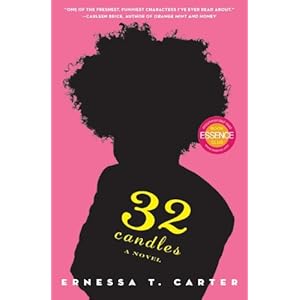
Meet: Ernessa T. Carter, author of 32 CANDLES

32 Candles is one of my favorite recent reads. I loved it! And I've been so happy to get to know Ernessa's blog Fierce & Nerdy. Like the woman and the blog, the book is funny, charming and very warm.


It is my pleasure to introduce you all to someone I hope will become a very big name in readers' circles (and movie circles, the book's already been optioned) and I urge you to check out her book, which pubs TODAY!


Funnily enough, author Lori Tharps, won the Snubbr.com giveaway here and chose 32 Candles as the book she will receive. So congrats Ernessa on your pub day! And congrats Lori on winning the book! 


White Readers Meet Black Authors: Tell us about your new book.

Ernessa T. Carter:  It’s about Davie Jones, a girl growing up mute, poverty-stricken and unpopular in Mississippi. She sees the movie Sixteen Candles for the first time and decides that she wants her own “Molly Ringwald Ending.” Much drama ensues.

WRMBA: Describe your work for someone unfamiliar with it. What's your writing style like? What subjects/themes do you explore?

ETC: I set out to write what I would call a literary romance, and what others might call women’s fiction. The point was that I love romantic novels and I love literary novels, and I didn’t understand why they were so often mutually exclusive. I like to talk about love, dreams, sanity, and emotion in really different ways. Most of all, I like to write the books I want to read, but aren’t seeing on bookshelves. If I wasn’t a frustrated reader, I probably wouldn’t be a novelist. Also, I like original characters. If my main character reminds you of someone else’s main character, then I want to meet that novelist, because obviously she is a parallel universe me that has come here in some kind of multi-dimensional time machine, and I have a few questions for her.

WRMBA: What's your goal(s) as a writer? Do you set out to educate? entertain? illuminate?


ETC: I think a lot people do this. They say, I adore movies and I adore writing, so I should be a screenwriter. That’s what I said to myself when I went and got my MFA for Dramatic Writing. I didn’t take into account that I don’t particularly like writing with other people or being told what to do or leaving the house for work. When you take that into account, I’m probably best suited to be a novelist. I think it’s important for people to keep on reassessing their personalities and make changes accordingly. I don’t regret my tangled journey, though. I got my first FT writing job and met my husband because of my MFA, so I consider it money well-spent, an investment in my future that paid off in really strange ways.


ETC: That’s an interesting question. Most of the authors I like have tons of fans already. For example, I’ve recommended ORANGE MINT AND HONEY to quite a few people, but usually they’ve either heard of it, already read it, or were planning to read it before I came along. Still, It took me over a year to find the graphic novel, BAYOU by Jeremy Love (which The Bottom of Heaven blogged about here), so I’d like to spread the gospel about that terrific read. I also wish more people would read BLACK WATER RISING by Attica Locke (reviewed here in the L.A. Times) and I adore how Lisa Tucker writes. Her book premises are never the same, and man, is she suspenseful.

Tuesday, March 9, 2010

Meet: J.D. Mason, author of TAKE YOUR PLEASURE WHERE YOU FIND IT

J.D. Mason is a friend of mine. We've both lived in Colorado forever, but we didn't meet until she read about me in Essence Magazine and emailed me. Proving that writers need to get out of the house more! Especially me.

So, full disclosure. She's my friend, but I'm hosting her here because she's a good writer. If you like women's fiction, I really do encourage you to check her out. Publisher's Weekly raved about her latest saying, "The day of reckoning is unavoidable for all four women in this fast-moving and fascinating look at friendship, the repercussions of keeping secrets, and the power of forgiveness."

White Readers Meet Black Authors: Tell us about your latest novel.

J.D. Mason: Take Your Pleasure Where You Find It is about three friends, who, growing up, were closer than sisters. Renetta, Phyllis and Freddie had each other’s backs, and if one of them had a problem, all of them had a problem and they all took care of it, together. During their senior year in high school, they faced the most horrendous challenge they’d ever encountered, and it took its toll on their friendship. As a result, they each went their separate ways. Thirty years later, they see each other at their high school reunion and are forced to finally come to terms with what happened back then, to each other and, most importantly, to themselves.

WRMBA: How would you describe your body of work? Your themes, tone, style? Why do you write about the topics you write about?

JDM: I’m all about the “thought-provoking-ism”. I don’t think that’s a word (Ha), but that’s what I strive for when writing stories. I want to give people something that sticks with them after they close the book. I want to give them characters that challenge their emotions, and storylines that leave them with a sense of, “hmmm…I never quite thought of it that way” or “I never would’ve looked at it like that.”

I don’t know how to describe my style of writing, but I know that I have one, and when I look back through my books, I see it, and I feel it when I read through a few chapters. Readers that like my books like my style. And then there are those who don’t like it at all. I sure wish they did, though. LOL

I choose topics that fuel conversations, opinions, and debates. I choose topics far removed from my own life because it challenges me as a writer and as a person, to think outside myself and consider how other people’s points of view can be different from my own. That’s the fun part. That’s the growing part for me.

WRMBA: What's your goal(s) as a writer? Do you set out to educate? entertain? illuminate?

JDM: I’m an entertainer, first and foremost. And I love being an entertainer. If I could sing, dance, or act, I would, but as it turns out, I write. When I was a kid, I used to entertain myself for hours, making up stories with my dolls and I loved it. Now I get to do it for other people and I am just giddy when I write a story that people enjoy reading. I don’t set out to necessarily educate, but if it happens, then that’s icing on the cake. I do know that have an underlying goal to illuminate; to shine light on a situation or a type of character, or an attitude about something that maybe readers didn’t quite expect, but can appreciate by the end of the book.

WRMBA: You self-published first, right? How was that experience different from being published? Would you ever consider self-publishing again?

JDM: I was clueless the first time I self published and it was definitely not for the sheepish, but I’ve learned a great deal since then. It takes a lot of effort, time, energy and devotion to being a good business person, and the work involved with running your own publishing business can definitely overshadow the writing aspect. I don’t know if I’d ever be good at self publishing, because I’m not a good business woman. There, I admitted it. And the reason I love having a publisher is because I can spend more time focusing on the writing part. But if I couldn’t land another contract from a publisher, and if I weren’t ready to give up being a writer, yes. I’d publish myself again in a heartbeat.

WRMBA: What's next for you?

JDM: I’ve just finished up the very last book in the One Day I Saw A Black King series, called Somebody Pick Up My Pieces, and I finally feel confident that this one is definitely the end of these wonderful characters. I feel a bit saddened by it, but also, I know that it’s time to finally say goodbye—on a good note.

I’ve also just turned in my very first science fiction novel to my editor. It’s the first in a brand new series I’m working on, and I am very excited to see how this adventure works out. If it does well, I’ll probably continue writing in that genre, but if it doesn’t, well…that’ll be the end of that and I can at least say I gave it a shot.

My teenage daughter recently helped me to map out a story idea for a sci-fi/fantasy young adult novel, which I think I’ll seriously consider shopping in the very near future. First I’ll have to search my soul, and be honest with myself about whether or not I can actually pull something like that off. I typically can’t relate to anyone under the age of 37 1/2, but we’ll see.

And finally, I’ve started my first book in a new series about a prominent black family in the south that will encompass the kinds of issues and dilemma’s prominent families tend to have. The family has a rich history, tons of relatives and money, and lots of shenanigans to fill volumes, and I’m looking forward rolling up my sleeves and to getting down to the nitty gritty of telling these people’s stories. The first book in the series is called Beautiful, Dirty, Rich. My editor came up with the title, and I just fell in love with it.

WRMBA: What's the best book (or whose the best writer) that not enough people know about?

JDM: Sandra Jackson-Opoku is, to me, one of the most brilliant and talented writers and under-appreciated writers that I have ever read. I think she only has two works of fiction out: The River Where Blood is Born and Hot Johnny and the Women Who Loved Him, and I loved them both. She has a way of mixing contemporary drama with African folklore and black American history in a way that is absolute magic to me, and it takes a real wordsmith to weave it all together the way she does.

Tuesday, March 2, 2010

Meet: Jabari Asim, author of A TASTE OF HONEY

Note: The winners of Uptown are Dani and Ellie. Congratulations ladies!


Count on me to do things backwards. I'm starting out Women's History Month with a profile of a male author. But I'm actually excited because this blog is a little too female-oriented. I try to keep a balance. But just so's you knows: not everybody I approach wants to be profiled or is interested in online promotion. Anyway, I am thrilled to introduce you to Jabari Asim. You gotta love a guy who wrote Who's Toes are Those AND The N Word!

He is also editor-in-chief of The Crisis—the magazine of the NAACP—and former editor at and frequent contributor to the Washington Post. His writing has appeared on Salon.com and in Essence, the Los Angeles Times, and other publications.

His answers here sealed my interest in his latest work, a collection of interlocking short stories. Please read our Q&A and then go get the book. It's out today! Pick it up at your local indie, if you're lucky enough to still have one. Or you can get it everywhere: at Barnes and Noble or Borders or Amazon.


White Readers Meet Black Authors: Describe your work for someone unfamiliar with it. You've done nonfiction, fiction and children's books, right? Wow! What's your writing style like? What subjects/themes do you explore?

Jabari Asim: I’ve done three nonfiction books for adults, all of which address themes of race and American culture in some way. Not Guilty, an anthology I edited in 2000, collected the thoughts of a select group of black male intellectuals on matters of law and justice. That book was inspired by the 1999 acquittal of the police officers who shot Amadou Diallo to death. I followed that with The N Word, which traced the epithet through American popular culture from roughly 1619 to 2007. I wanted to explore the relationship between language and white supremacy and also look at the effect of racist ideas on blacks, whites and other Americans. What Obama Means attempts to look at ways in which our popular culture (books, movies, newspapers, music, sports, etc.) prepared for us a moment in which we could even take seriously the idea of a black presidential candidacy. (Check out his interview with Stephen Colbert.)

My first children’s book, The Road to Freedom, was a novel for middle-schoolers about a boy and his father trying to reunite their family after Emancipation. I’ve also done a picture book called Daddy Goes To Work, in which a little African-American girl accompanies her father to his job, and four board books for babies. My most popular book is called Whose Toes Are Those? Many people don’t connect it with the man who wrote The N Word, which occasionally leads to some amusing encounters.

A Taste Of Honey, my latest, is fiction written for an adult audience. Set in a small Midwestern city in the sixties, it looks at the effect of social and political change on a somewhat insular black community.

I strive for the qualities Edmund Wilson once called for in good writing: cleanliness, precision, ease and force. Like most writers, my success rate varies. I’m fond of lyricism because I started out as a poet. As I’ve progressed, I’ve worked increasingly toward a leaner, simpler aesthetic. I’m not there yet. As for subjects/themes, everything I write—and I do mean everything—is inevitably shaped by my experiences as a husband and father. Those are the only things I wanted to be even more than I wanted to be a writer, and I’ve been fortunate to experience both.


WRMBA: I'm curious, why did you choose interrelated short stories instead of a novel?

JA: I originally started writing the stories as a diversion while working on The N Word. That book took me six years and often required immersing myself in some depressing, hateful stuff. A Taste Of Honey allowed me to cleanse my palate if you will, while exercising my writing muscles. Janet Hill, who was then an editor at Doubleday, purchased the book based on a few of the stories. The idea of linking the stories emerged during conversations with her.

WRMBA: People ask me this question a lot, so I will pass it on: What was it like transitioning from nonfiction to fiction? Will you continue writing both?

I don’t really consider myself as someone who transitioned from nonfiction to fiction. My first appearances in major publications were short stories. I had one in In The Tradition, a 1992 anthology of young black writers edited by Kevin Powell and Ras Baraka, and another in Brotherman: The Odyssey of Black Men in America, edited by Herb Boyd and Robert Allen. The nonfiction actually came a little later. I’m committed to continuing to do both while dipping my toes into poetry every once in a while.

WRMBA: What's your goal(s) as a writer? Do you set out to educate? entertain? illuminate?

JA: I do feel an obligation to inform when I write, although the information I convey can be as simple as “this is how it was” or “this is how a particular group of people lived at a certain point in time.” In A Taste of Honey, for example, I wanted to examine black love (I’m very much a romantic) as I have often perceived it. My parents have been happily married for more than 60 years, and I’ve been ecstatically married for almost 25. That may be why I tried occasionally to function as a fly on the wall in A Taste Of Honey, providing intimate glimpses of domestic life both happy and horrific. For me, the larger motive also reflected a desire to offer snapshots of black family life in an urban community during the dawn of the civil rights revolution. Of course, no reader is going to stick around long enough to glean any lessons if the material isn’t entertaining. I tried to leaven my stories with humor wherever possible.

WRMBA: What's next for you?

JA: I’m at work on a couple of nonfiction projects that are too shapeless to describe in detail yet. I have a picture-book under contract with Little Brown. I’m also working on a novel that again looks at black romantic love during a specific historical period. I suppose I will always focus on love in some fashion.

WRMBA: Where can people find you online?

JA: I blog at Amazon.com and Goodreads.com, and folks can also follow me on Twitter and Facebook.

WRMBA: What's the best book (or whose the best writer) that not enough people know about?

A wonderful question. My answer is a tie: Mat Johnson and Ricardo Cortez Cruz. Both are terrific writers with unique styles.

Tuesday, February 2, 2010

Meet: Dolen Perkins-Valdez, author of WENCH


I finished reading Wench last night and I still feel shaken. The language is spare, the characters hop off the page and live with you, and the story is powerful, powerful stuff. I definitely recommend it!

I'm delighted to introduce you now to the author, Dolen Perkins-Valdez, who was kind enough to answer some questions for the blog.

White Readers Meet Black Authors: Tell us about Wench. How did you come to write this story? What subjects/themes do you explore? What's your writing style like?

Dolen Perkins-Valdez: Wench began when I stumbled upon a fascinating footnote of history. While reading a biography of W.E.B. DuBois, I learned that during the 1850s, there was a summer resort near Xenia, Ohio notorious for its popularity among slaveholders and their enslaved mistresses. I was stunned to learn this little-known historical fact. I decided to do a bit of historical excavation and learn more. At the time, it was very popular among the country's elite to visit natural springs. This particular resort opened in 1852, and became popular among southern slaveholders and their enslaved mistresses. I knew that Ohio was a free state and many of the northerners were abolitionists. Yet I was fascinated to learn that because they did not enjoy vacationing with the southerners and their slave entourages, they stopped coming and business declined. The place closed in 1855. I began by asking myself: If the women entered free territory, why wouldn't they attempt to escape? Is it possible that they actually loved the men? As I made my way through draft after draft, I discovered that these were not questions easily answered. Even the answers I thought I would find turned out to be much more complicated than I'd imagined. (You can learn more in this NPR interview.)

WRMBA: What's your goal(s) as a writer? Do you set out to educate? entertain? illuminate?

DPV: Of course I set out to entertain. Always. I come to writing as a reader first. I judge any book by whether or not I am able to lose myself in it. I have a reading chair at home. With a good book and a stretch of time, I can disappear into that chair. I hope my book does the same for other readers.

WRMBA: What's your biggest surprise-good or bad- (so far) about the publishing biz?

DPV: My biggest surprise has been how nice other writers are. I was always a bit frightened by published writers. Yet I have met so many who are just the nicest people you'll ever meet. I suppose my fear was all in my head. There is a lot of love among writers in this industry, especially among women writers. It's a beautiful thing.

WRMBA: What's next for you?

DPV: At the moment I am concentrating on promoting Wench. Once things slow down a bit, I'll get started on the next one. By summer, I hope to be deep into my next project.

WRMBA: What's the best book (or whose the best writer) that not enough people know about?

DPV: There are so many!!! You are one, Carleen! I'm always telling people about you. Also, I am a huge fan of Tayari Jones. I hope people recognize her brilliance. [For Black History Month, I'm blogging about other writers you should know about over at The Divining Wand. Please stop in.]

WRMBA: Thank you!  Any advice for aspiring novelists? Someone asked me the other night how do you maintain some confidence through the long process of writing a novel. How did you do it?

DPV: So far, I have answered this question by saying "keep the faith" to every interviewer who asks it. But how does one keep the faith? There is no easy answer to that. I am driven by a passion for reading and the act of writing. Find what drives you. Gain energy from that. It is all that matters.

WRMBA: What else do you do with your time besides write--work? family? hobbies? Anything you want to share with readers?

DPV: When I'm not working/writing, I am spending time with my husband and daughter. That's about all I can handle.

Thanks Dolen and continued success with this book and all the ones to come! See you in April!

Tuesday, December 1, 2009

Meet: Erica Kennedy

Erica Kennedy is the author of the novels Bling and Feminista (both of which are great reads and would make great gifts for someone who can't get enough of People, US Weekly, and Vanity Fair and appreciates witty writing and meaty ideas). She blogs at The Feminista Files and you can also follow her on Twitter.

Erica was kind enough to answer a few questions about her work and her views of the biz....

White Readers Meet Black Authors: Describe your work for someone unfamiliar with it. What's your writing style like? What subjects/themes do you explore?

Erica Kennedy: I tackle most things with humor and that's how I think of myself: as a humorist. Sometimes I think that comes out of the fact that I had a very dysfunctional childhood and I have suffered from depression so it's a "tears of a clown" thing. You need to find the humor in everything just to survive. Like if I were ever to write an Augusten Burroughs-style memoir of dysfunction -- and I could -- it would still be funny like his always are.

I read somewhere that writers are always telling the same story in different ways. And I think I'm always telling the story of the haves and have-nots, insiders and outsiders. I'm very interested in the idea of social hierarchies -- who is revered and why. In Bling, there was a cast of rich, powerful or famous people and then others who wanted that power. Also the women in Bling got to tell most of the story which is not how it is in the real hip-hop industry where women are mostly objectified. My new book, FEMINISTA, is class warfare wrapped up in a romantic comedy. In both of my books I write in multiple POV because I've felt like both the have and have-not. Haven't we all? There's always someone who has more, always someone who has less than you.

WRMBA: Tell us about your latest novel.

EK: FEMINISTA is a romantic comedy with edge. Sydney Zamora, the heroine is aggressive, she's angry and that was a conscious decision. I think a woman showing her anger is a feminist act as is writing a chick lit about one! I hate when the heroine in chick lit/flicks is this infantilized klutz who just wants to find a man to save her. Sydney goes on a very active, misguided quest to find a mate but it's really about her figuring out her own shit.

I wanted to play with the idea of masculine and feminine because we've reached a time when men and women don't have such defined gender roles. Sydney is very aggressive and Max, the love interest, is very passive. That doesn't have to do with their gender, that's just who they are. Sydney's sister, Liz, is very passive but her wife, Joyce, is aggressive. Again, not really about gender but rather their personalities. So I think it's great that both men and women have more leeway to be uniquely themselves but it also creates confusion when it comes to dating because we're still not sure who should, say, pick up the check. That's why the book starts off with that situation going very awry!

WRMBA: How do you feel about the "bitch lit" tag?

EK: That came out of an early Publisher's Weekly review and I embraced it. It signals to people that this is not your typical fluffy chick lit. I know people will receive that label differently depending on what they are projecting onto the word "bitch" but I think the same could be said for Sydney. Some people say they love her, some people say they can't stand her -- and I love both reactions equally. When a character that I dreamed up in my head can provoke such a visceral reaction, I'm happy.

Funny thing is I read a non-fiction book called "Am-bitch-ous" while I was writing this and that was something I really wanted to touch on in the book: female ambition. In 2009, there are so many women who are not comfortable being the boss, making a lot of money, or saying "I got where I am because I work hard and I'm good at what I do".

I think everyone loves Beyonce, this global superstar who literally has it all at 27, because she always takes the "I'm so blessed just to be here" road and shunts all of her aggression and ambition off on an ALTER EGO. I swear I could write a whole DISSERTATION on the meaning of Sasha Fierce which is at once totally brilliant and totally terrifying that you have to go to that extent to be wildly successful and still be liked if you are a woman. Meanwhile, her husband, the former drug dealer who once shot his brother, stabbed a record executive, brags endlessly, like all male rappers, about how much dough he makes, can let everyone know exactly who he is. The difference in what they each had to do to get and maintain their success is ASTOUNDING.

But I totally get why women do that. Because when you don't humble yourself and play the good girl, you become labeled a diva or a bitch or an ice queen. You become Anna Wintour or Hillary Clinton or J. Lo in the early years before she learned the Hollywood game and realized she needed to tone down her badass Bronx swagger to keep getting cast in romantic comedies. *sigh*

WRMBA: Sydney is a feisty character, but she's also damn funny. Where forms your sense of humor?

EK: I always go for the joke. Sometimes I wish I could not go for it but that's my natural instinct. And I think sometimes the worst things that happen to us are the funniest. But we can't see that while we're in it. What's that saying? Comedy is tragedy plus time. So when I'm writing a book or screenplay, sometimes I'll ask myself, "What is the worst possible thing that can happen to this character right now?" And that will yield something funny. But since I am not that character, I have the perspective to see the humor. And the worse it is for them, the funnier it is to us.

I also think Mitzi the matchmaker is really funny because she was inspired by a real-life matchmaker who is hysterical! But one of the things that makes this woman really funny is that she's a truth-teller. And that's how I think of Mitzi. She tells it like it is and never sugarcoats anything.

WRMBA: Feminista features an interracial love story and multiracial characters. Do you think of yourself as a "black writer"? Have any strong opinions about how so-called black books are promoted?


EK: Do I think of myself as a "black writer"? Wait, is that a trick question?! lol I grew up in an all-white neighborhood, I went to Sarah Lawrence which was a school filled with privileged white kids but where my core crew was black, I knew a lot of people in the hip-hop world who were very rich, self-made black people, I've dated men of different races. I've grown up in a very multicultural world, in all these different social milieus so that's the kind of world I depict in my books. Even with Bling where most of the characters were black because it was set in the hip-hop world, you had people from different social classes and backgrounds because that's interesting and creates conflict for the story.

But it's interesting that when I wrote this book about the hip-hop world, I got this big push from the publisher. But I didn't get that with FEMINISTA which has now been covered in Essence and Latina and Disgrasian because it's a story that all these different woman can relate to. I attribute that, in part, to how much the publishing industry has kamikazed itself in the last 5 years but also I think it has more to do with gender than race. It's fine for all these rich, powerful men in Bling to do the most scandalous things but it's not okay for a woman like Sydney to be aggressive and not know her place.

Most of the female editors who read the manuscript were afraid Sydney would be read as unlikable and you know what? Some people don't like her! Hell, I don't at times in the book. But that's that good girl complex I'm talking about. Who says everyone has to like her? Isn't the bitch often the most interesting character? Some people don't like Sydney and there are other people who totally identify with her or say "I know someone JUST like her." Even last night on Twitter this whole convo started about who should play Sydney in the movie. (It's being shopped right now.) And it was so interesting for me to hear everyone's different ideas of what she looked like and WHY they thought that.

WRMBA: What's your goal(s) as a writer? Do you set out to educate? entertain? illuminate?


EK: I definitely want to entertain but you can always say something while being funny and that "something" will likely be received better. Even with Bling which was a campy satire, I still tried to address the power hip-hop music has on the culture. As absurd as the habits of that world can be, I also wanted to respect the influence it's had.

With FEMINISTA, there were some anonymous commenters on my blog early on who were sort of like, "How dare you talk about or trivialize feminism!" The best, now oft-repeated for laughs comment was "For are disgrace!" But why the hell shouldn't I talk about it?!

I think if you asked 5 different women to define "feminism" or "feminist" you'd get 5 different answers because it's something that is always evolving with the culture as it should. I'm part of that evolution, you're part of it, women who make movies or appear on magazine covers or run companies are part of it, women choosing to leave the workforce to raise families, Serena Williams nude on the cover of ESPN magazine, looking sexy and strong by revealing an awe-inspiring body made of muscle SHE built...

Feminism is not this highbrow subject only to be discussed by academia. I think it's all of our lives as we're living it.


WRMBA: We've had lots of discussions around here about whether or not putting people of color on the cover of a book harms the ability to sell the book to people of no color. The cover of Feminista seems to show only white people, and gives the impression the protagonist is white. Do you agree with that assessment? What do you think of the book cover?


EK: I had a big fight with Miramax Books over the Bling cover because they shot a giant necklace that said BLING on some model's sweaty chest. It looked pornographic! The cover we used was one of FIVE different options that I designed myself. So when I saw the FEMINISTA cover it didn't look so bad to me compared to that first Bling craziness.

The FEM cover was also just a black and white sketch at first so I thought of it as race-neutral. My main problem with it was that it seemed limp. It felt very chick lit and I wanted something stronger that telegraphed the edgier tone of the book. But oddly, I never really thought of it depicting a white woman until people started saying that to me! I just thought of it as a sketch. And in a weird way, I liked that the men in the window were different colors because that was a graphic way of showing the multicultural aspect of it. Or something. At this point, it is what it is.

WRMBA: What's next for you?


EK: I'm polishing the FEM screenplay and working on some others. Dealing with the publishing industry (both experiences) has really soured me on books. Publishers are so woefully out of step. I can't imagine writing another novel until I can publish myself on Amazon.

WRMBA: What's the best book (or whose the best writer) that not enough people know about?


EK: Sellevision by Augusten Burroughs. That's his first novel that I don't think a lot of people know about. Not sure if he ever wrote another novel after that. But it's funny as shit!

WRMBA: Thanks Erica! Personally, I hope you keep writing novels, but I'd go see a movie written by you too.